






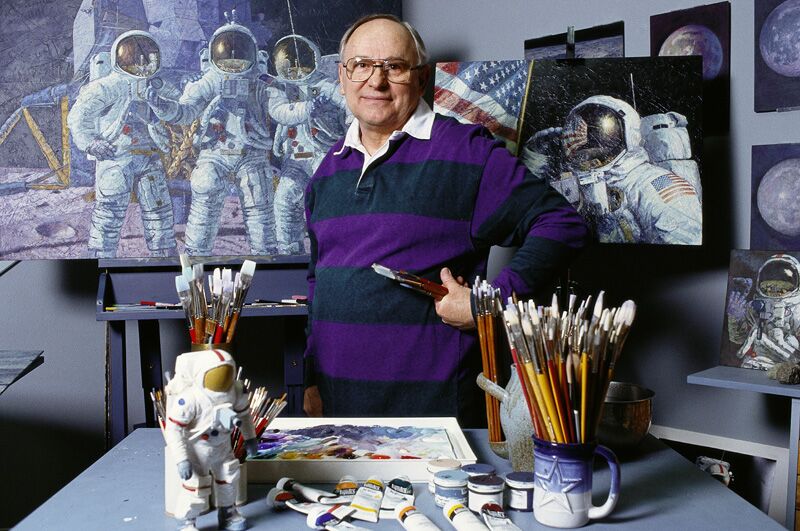
Alan Bean walked on the moon and lived to paint the tale of his and other Apollo astronauts’ lunar experiences.
by Don Vaughan
Art has always been one of the most integral ways in which humankind has documented its accomplishments. Primitive cave paintings depict the animals that early humans hunted for food, as well as other aspects of their existence. Eons later, artists turned to paint and other media to chronicle notable events of their time and to render the portraits of important individuals. In so doing, art helped preserve and validate history.
Fifty years ago, however, when Neil Armstrong and Edwin “Buzz” Aldrin became the first humans to walk on the moon in July 1969, no artists were commissioned to cover it. The remarkable achievement was documented only on film.
Photographs provide facts, but they commonly lack emotional integrity. Art sees through the “real” to reveal the inner heart of a memorable journey. Luckily, NASA had within its ranks a talented artist, astronaut Alan Bean, who—over a period of more than 35 years—painted scores of scenes depicting his experiences and those of the other Apollo astronauts. In the process, the artist revealed more than any photograph ever could.
Bean, who died on May 26, 2018, was a Navy test pilot when he joined NASA in 1963. He became the lunar module pilot on Apollo 12, and, in November 1969, was the fourth human to walk on the moon. In addition, Bean spent 69 days aboard Skylab 3 in 1973 and was a member of the Space Shuttle program when he left NASA in 1981 to pursue painting.
Art-and-Space Matrix
Bean’s interest in art dated back to 1962 when, as a test pilot assigned to the Naval Air Test Center, in Patuxent River, Md., he enrolled in two art classes at St. Mary’s College. “My first two courses were drawing and watercolor,” Bean says in Painting Apollo: First Artist on Another World (Smithsonian Books, 2009), the second of two coffee-table books about his art. He enjoyed both classes but described himself as “primarily a pilot with painting as a hobby.”
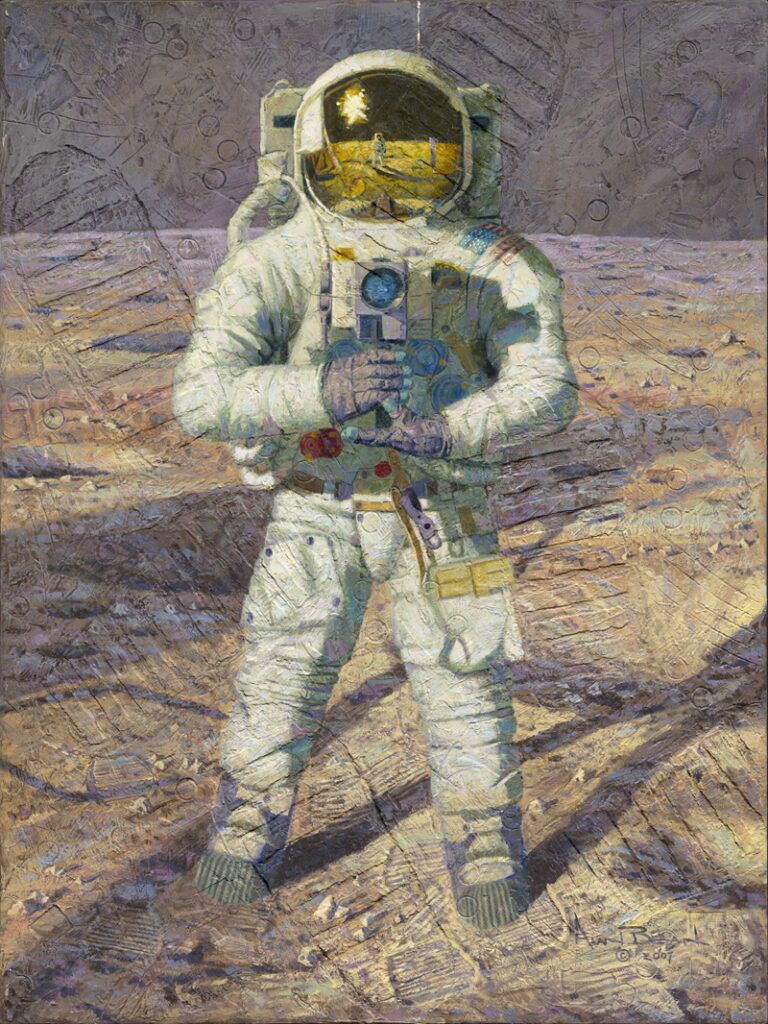
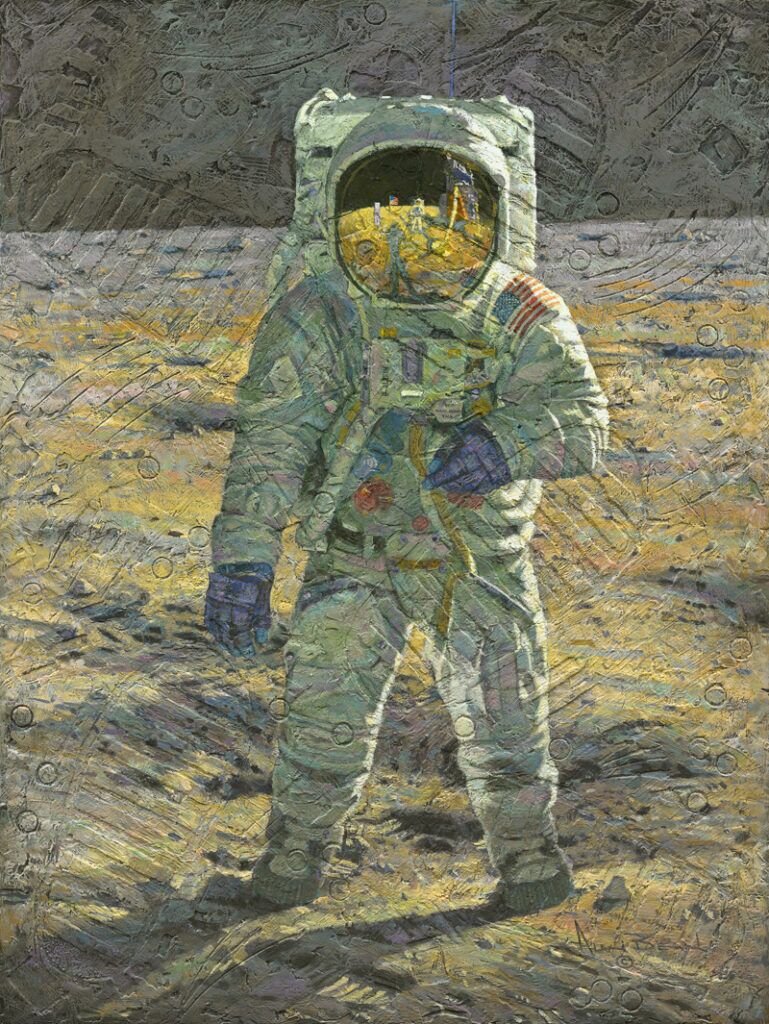
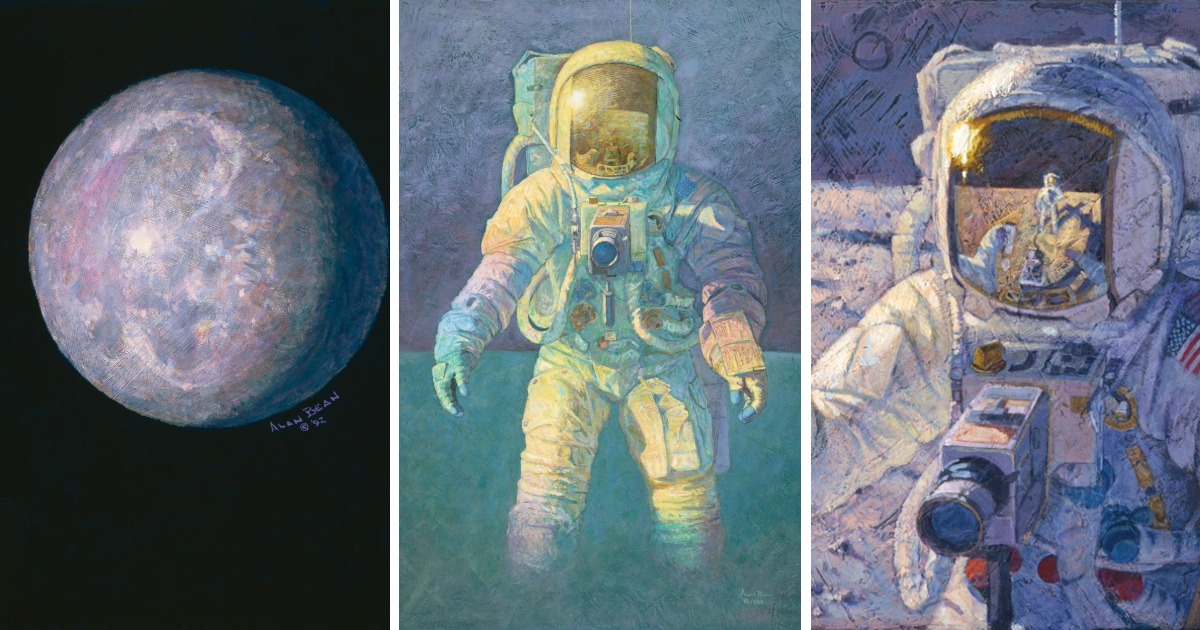
Bean based First Men: Edwin E. “Buzz” Aldrin (right, acrylic with moondust on panel, 40×30) on an iconic photo taken by Neil Armstrong—but no clear photo of Armstrong on the moon exists. Bean based First Men: Neil A. Armstrong (left, acrylic with moondust on panel, 40×30) on the reflection seen in the visor of Armstrong’s photo of Aldrin.
[credit] Alan Bean © 2013 (Aldrin) (c) 2011 (Armstrong), courtesy of The Greenwich Workshop ®, Inc.
Bean continued his art education in Houston, after being assigned to NASA’s Lyndon B. Johnson Space Center, by taking weekend and night classes at the Houston Museum of Fine Arts between assignments. Following Bean’s stint on Skylab, his fellow astronauts encouraged him to stop painting still lifes and turn his artistic eye to the heavens. “You can tell stories that will be lost to history if you don’t paint them,” his colleagues told him, as Bean recorded in Painting Apollo. “You can share the experience of being the first artist in all of human history to see a world other than our own.” Bean, observed, “My paintings would not replace the photographs, movies or TV shots we made, but they might bring a more personal, less technical touch to this extraordinary experience.”
Upon retiring from NASA in 1981, Bean started painting with gusto, focusing almost exclusively on the Apollo lunar missions. “I believe Alan was meant to do this,” says Bean’s widow, Leslie.
Of Earthly and Lunar Matters
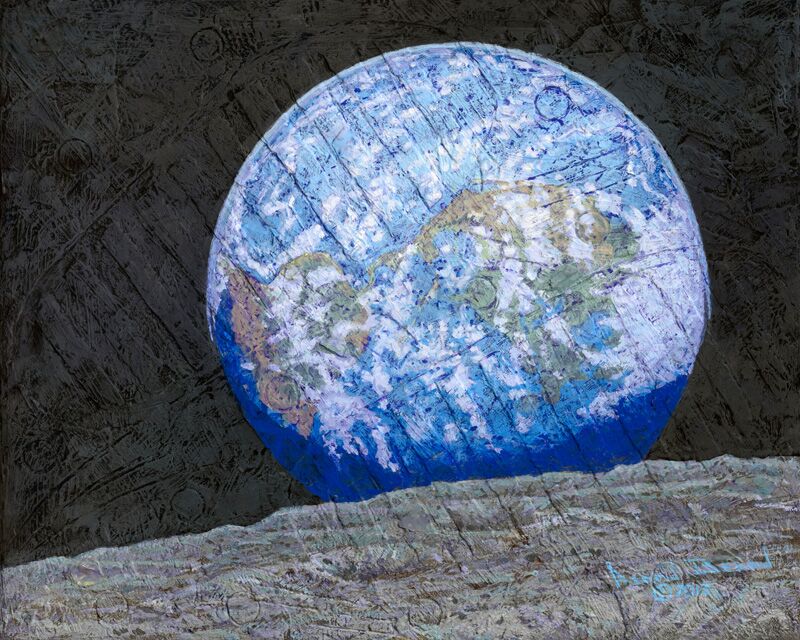
Bean painted with acrylics, primarily on Masonite and aircraft plywood; rarely did he paint on canvas. He typically created numerous preliminary sketches before actually putting paint to board. Interestingly, he incorporated aspects of his time on the moon into many of his paintings. Using the metal hammer he’d taken to the moon and replicas of his moon boots, he sculpted a texture onto the surface of his works. Some of his paintings contain moon dust or materials from spacecrafts or spacesuits. “There is a bit of magic in all of my recent paintings, starting with a trace of actual moon dust from patches and insignias I wore on my Apollo spacesuit,” Bean wrote on his website. “I also add particles of the heat shields from our Apollo 12 Command Module, charred during its fiery 25,000-miles-per-hour re-entry into the Earth’s atmosphere, plus bits of gold foil from the forward hatch of our Command Module.”
[credit] Alan Bean © 2013, courtesy of The Greenwich Workshop ®, Inc.
According to space historian Andrew Chaikin, a friend of Bean’s and co-author of Apollo: An Eyewitness Account, Bean believed that these incorporations made his paintings extra special. “He felt that it infused into the actual piece of art a bit of the experience that he was painting,” says Chaikin, “and it’s hard to argue with that when you realize there are traces of moon dust in those paintings. How many other artists could do that? It was amazing to be in his studio and hold the hammer he actually used on the moon.”
“Alan would say that painting well was harder than flying a military plane or going to the moon.”
—Leslie Bean
A Challenge Well Met
According to his friend Chaikin, Bean never stopped trying to improve on his innate talent. “He was always struggling to live up to his own aspirations,” Chaikin says. “He would be so pleased when he achieved a result that he was happy with. I would hear that from him often. And other times I heard, ‘Well, I’ve been working really hard on this painting, and it’s just not there yet, and I guess I’m just going to have to keep working on it.’ He never shrank from that.”
Leslie Bean confirms her husband’s dedication to his craft, noting that he would spend weeks experimenting with color palettes until he achieved exactly what he was looking for.
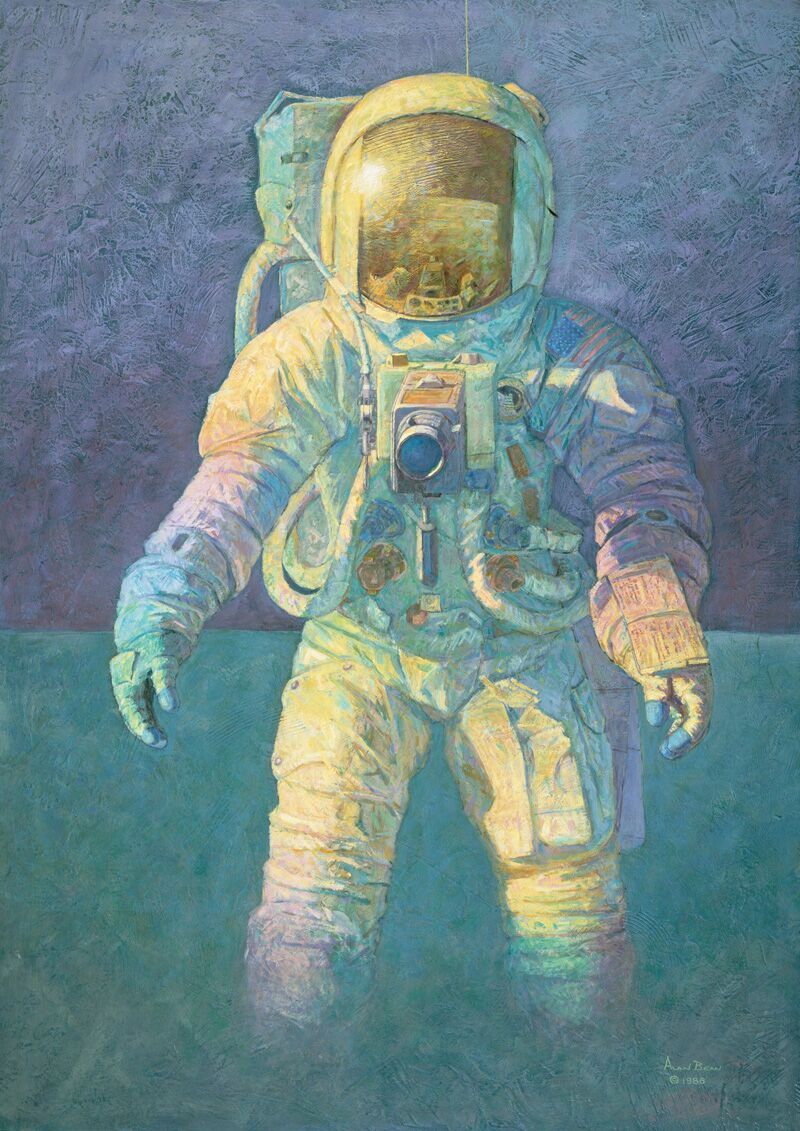
[credit] Alan Bean © 1988, courtesy of The Greenwich Workshop ®, Inc.
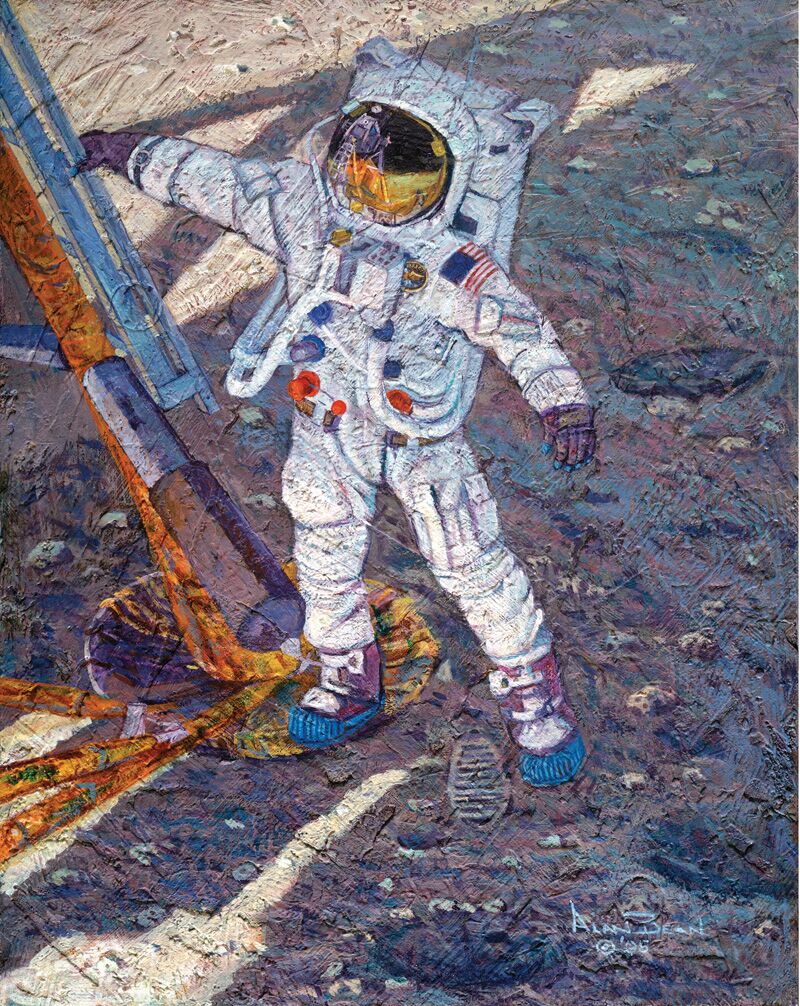
[credit] Alan Bean © 2014, courtesy of The Greenwich Workshop ®, Inc.
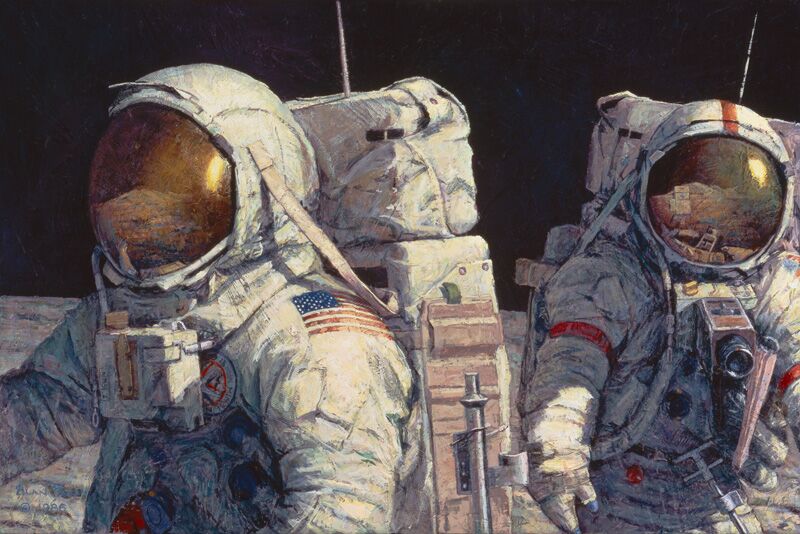
[credit] Alan Bean © 2016, courtesy of The Greenwich Workshop ®, Inc.
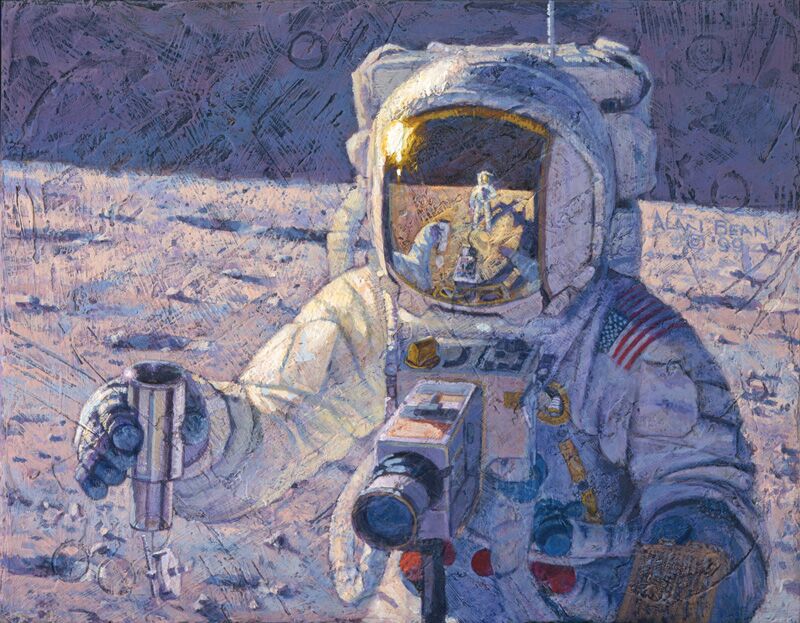
[credit] Alan Bean © 2010, courtesy of The Greenwich Workshop ®, Inc.
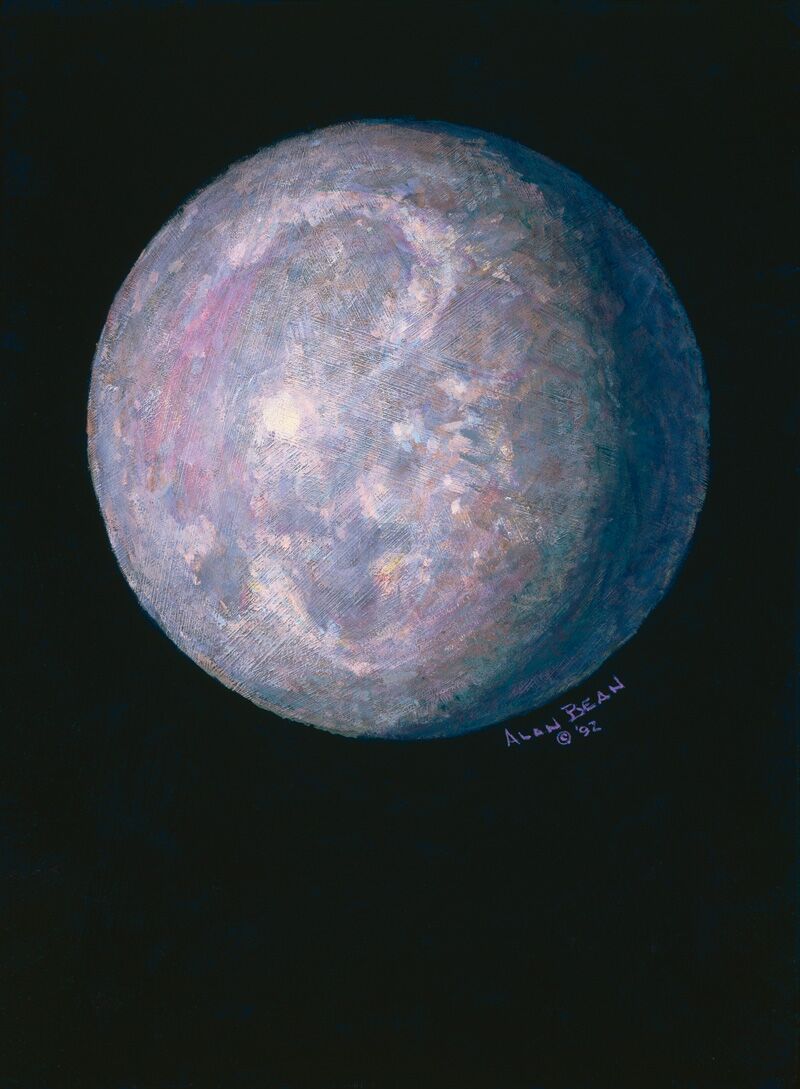
[credit] Alan Bean © 2017, courtesy of The Greenwich Workshop ®, Inc.
All told, Bean created more than 200 paintings and two wall-size murals over the course of his career. Describing the unique contribution of her husband, Leslie Bean says, “I believe that, historically, Alan will be considered the father of space art as we know it because he was the only artist who traveled off this planet and painted what he saw in his explorations. Alan would say that painting well was harder than flying a military plane or going to the moon. He worked at it all the time. He was always striving to be better in everything he did, including his art.”
Don Vaughan is a full-time freelance writer living in Raleigh, N.C. Visit his website at donaldvaughan.com.