



For more than 40 years, the Sundance Film Festival was virtually synonymous with Park City, the ski town that hosted premieres of indie classics like “Reservoir Dogs,” “Little Miss Sunshine” and “Sex, Lies, and Videotape.”
But in 2027, Sundance will depart the mountain resort for its new home in Boulder, Colo., lured by tax incentives, as well as a desire to make its showcase of cinema more affordable for the artists and film lovers who have been priced out of trekking to Utah. It’s a move that’s generated controversy, but one that festival director Eugene Hernandez says comes with a chance to make Sundance more accessible as it looks to inspire and showcase the next generations of talent.
“Our mission travels with us wherever we go,” Hernandez says. “We’re trying to look at every potential challenge and see the opportunity.”
As Cannes kicks off, Hernandez walks Variety through the progress Sundance has made to build out its infrastructure in Boulder and previews what it’ll be like to be on the ground in Colorado as a new era of the festival begins.
The next Sundance is seven months away. How is it coming together?
I feel great about it. Cannes is starting, and this is always a turning point for the planning of the festival. Many of our meetings and conversations in France over the next couple of weeks will obviously be about Boulder. I’m really excited about how it’s shaping up, because we’ve seen not just an excitement in Boulder, but an overwhelming sense of anticipation, creativity, generosity and support that is heartening — from Gov. Jared Polis’s office at the state level, to the city manager of Boulder and everybody on down. The last two years, so many of the leaders in the state and city, including the governor, have all been at the festival so they have a good understanding of how we operate. They’re bringing great ideas and opportunities to the table.
This move comes with risk. Park City was the home of Sundance for decades. I can’t think of another major film festival that has relocated in this way.
You’re right. We, as a team, are fully mindful of the many challenges and opportunities for us. But I think about the words of our late founder, Robert Redford, who instilled in us an ethos that the only constant is change and and the only way that we as an institution can respond to the challenges and the risks we face is through bold thinking. We were just in Mexico City for Sundance CDMX. Amy Redford was at the festival with us, and she and I were talking about how we manage and navigate the challenge of moving a festival of this scale from one place to another. She reiterated her dad’s words that you need to face obstacles and challenges with boldness. That spirit has been driving us. The way I look at it is not that we’re moving a festival. We are building a festival.
You mentioned Amy Redford’s words being a guiding force. I’ve never met or talked to Amy Redford, but my understanding was she wanted the festival to stay in Utah. Did she support this move?
Amy is tremendously supportive. She lives in Salt Lake and she loves Utah. But she’s incredibly supportive of the move. She has been on the ground in Boulder many times. In fact, she previously studied at the university in Boulder, just like her dad did.
[In a statement, Amy Redford said: One of my Dad’s favorite sayings was ‘Nothing endures but change.’ The Sundance Film Festival continues to evolve, but always with the critical work of the storytellers at the center. It is that true north which has allowed us to serve this community for decades. We will continue to innovate our year round artists programs from our original home in Utah, and deliver on our festival in old ways and new in our new home of Boulder Colorado. We are excited to meet the challenges and the opportunities that this new landscape affords us. It will not only keep us humble, but reaching for the new horizons so desperately needed by our artists. Boulder has met us with open arms, and we are filled with gratitude at how they have met us in this moment.”]
I know it’s early, but will there be the same number of attendees at Sundance the first year in Boulder or are some people taking a wait-and-see approach?
I feel good about where we are. We’re seeing a lot of demand and interest not just from our country, but from the international community. There are folks who told us they haven’t been able to come to the festival for years, certainly not since the pandemic, who are expressing a desire to come back. Passes and packages haven’t gone on sale yet, but over the past year, we’ve been doing monthly events in Colorado. It’s a way to get to know the community and to introduce ourselves, tell them more about Sundance, and to communicate that the Sundance Film Festival is not a private industry event. Sundance has always been a community festival.
When do passes go on sale?
We haven’t announced the date yet, but typically they go on sale late summer, early fall.
Have you secured all the theaters for screenings? Will the number be comparable to what there was in Park City?
It will be more robust [compared to] the numbers of venues in Park City. In Utah, you had a concentration in Park City. And then you had another collection of venues near Kimball Junction and another concentration of venues in downtown Salt Lake City. We are taking a festival that was more spread out, with the furthest distance being 45 minutes between Salt Lake and Park City, and concentrating that in a two square mile block in downtown Boulder. That paints a picture of how the festival will be different.
How many theaters did you have in Park City and how many will you have in Boulder?
Last year in Park City, we had four premiere venues total — we were at the Yarrow, The Library, The Ray and The Eccles. In Boulder, we have 11 venues that are locked, which we’re currently building out and enhancing by adding sound and changing up the screen.
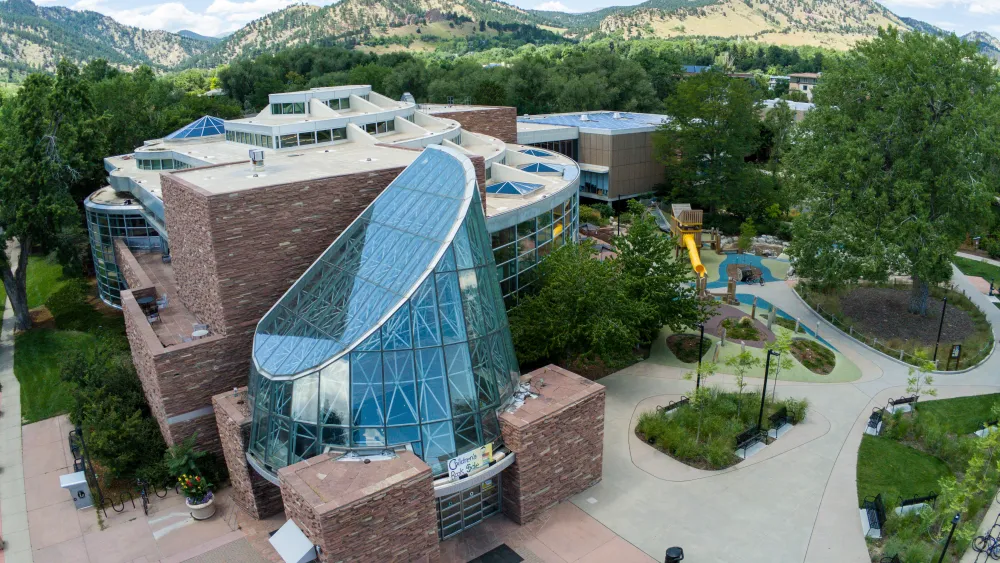
Boulder is a city that is known for its appreciation of the arts. It has one of the highest concentrations of artists in the country. So we’re going to be leaning into that. There’s a great performing arts venue called eTown, where there’s a weekly music radio show, so it’s got perfect sound and really comfortable seating. And that’s right downtown in Boulder. There’s Dairy Arts Center, which is this multi-screen, multi-theatrical space venue where the Boulder Ballet is housed. There’s also an arthouse cinema screen and a great lobby for receptions and an art gallery. Then there’s the Colorado Chautauqua, which is an iconic performing arts venue that has been a place that Coloradans go for summer concerts and amphitheater experiences. It is covered, but they’re doing this amazing winterizing effort that will benefit us and will benefit the community year-round. There’s a venue we’re using on campus at at CU Boulder, called the Macky Auditorium, and locals say it’s like having Carnegie Hall in central Boulder.
A map of Sundance’s plans for Boulder
How does the technology in these venues — the sound, the projection — compare to Park City?
I’m always going to be very respectful of Park City, because I think the venues in Park City over 40-plus years were tremendous. But a lot of the venues in Boulder are beyond world class. It’s rare that a festival gets an opportunity to enhance its audio and visual presentation in this way. We’re going to do everything we can to take the festival’s screening experience to a beautiful and exciting new level.
When Sundance made this move, one of the reasons was that Park City, despite its charms, had become hard to afford. Will that change in Boulder? You just had hotel rooms go on sale at reduced rates for industry and press. Did that go well?
The short answer is yes. Look at the rate you’re likely paying at a hotel like the Moxy in Boulder and compare that to what you likely were paying at a Park City hotel. There is a level of accessibility and affordability and a range of opportunity for housing that will meet a wider range of festival budgets. Even within just the central core of Boulder, there’s a nice array of hotel options that meet different budget needs. What we are offering festival-goers right now is a greater level of pricing within proximity to the festival than ever before.
You said you were building a festival in Boulder, not just moving one to Boulder. Building takes time. Given that, is it fair to measure your first year in Boulder against your final ones in Park City?
You’re absolutely right: Building takes time. By the time we get to the festival in January 2027, it will have almost been two years since we announced the decision to move. That time alone has been invaluable. We’ve had a team in Boulder making venue decisions and overseeing the construction to install more speakers and different screens. We’ve spent a lot of time working with the community. But to your point, the way I look at it, the festival in 2027 will be a starting point. I’m super enthusiastic about being given an opportunity to engage new audiences in a way that is more accessible for them. And we’re going to keep building on the foundation we’re laying in Boulder in 2027.
Here’s a full list of venues at Boulder:
Theaters:
- Cinemark Century Boulder P&I Venue
- Macky Auditorium Concert Hall
- Chautauqua Auditorium
- Boulder High School Auditorium
- Boulder Theater
- Roe Green Theatre
- Casey Middle School Auditorium
- Boedecker Theater — Dairy Arts Center
- Gordon Gamm Theater — Dairy Arts Center
- Muenzinger Auditorium
- eTown Hall
Talks and Festival Programming:
- Canyon Theater, Boulder Public Library District
- Dairy Arts Center
- eTown Hall
- Old Main — University of Colorado Boulder