




The first contemporary “Yellowstone” spinoff, “Marshals,” kept the Montana setting but switched genres from big-budget soap opera to humble broadcast procedural. The second, “Dutton Ranch,” maintains the tone of the original while transplanting the action to Texas — not coincidentally, the home of “Yellowstone” creator and “Dutton Ranch” executive producer Taylor Sheridan and the backdrop of the prolific showrunner’s swashbuckling oil drama “Landman.” Given that the presence of “Yellowstone” protagonist Kayce Dutton (Luke Grimes) was enough to make “Marshals” a major hit, regardless of the stylistic shift, “Dutton Ranch” seems like even more of a sure bet for streamer Paramount+. “Dutton Ranch” doesn’t have to be excellent or original to be considered a success; it just has to be an adequate placebo for its predecessor. On that score, the spinoff is an unqualified win.
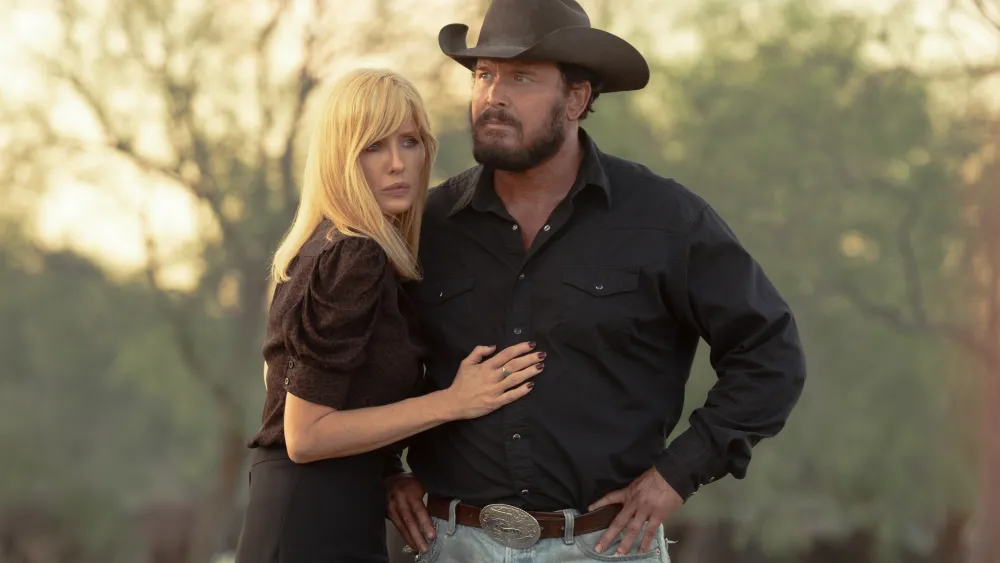
With Kayce off fighting crime and the other Dutton siblings deceased, the only family member left to carry on the legacy of late patriarch John (Kevin Costner) is Beth (Kelly Reilly), who’s barely had time to emotionally recover from committing fratricide when she and her husband Rip (Cole Hauser) lose their Montana ranch in a wildfire. (If you think climate change comes up as a contributing cause, you don’t know what TV universe you’re watching!) Beth and Rip are left with no choice but to put all their remaining resources into buying a sprawling property in the fictional, border-proximate town of Rio Paloma, Texas, moving south with their adopted son Carter (Finn Little) and starting their television show — sorry, cattle business! — over from scratch.
Beth and Rip’s primary antagonist in tending to their herd of Black Angus steer with, we’re repeatedly told, sterling genetics is one Beulah Jackson (Annette Bening). Beulah is the local heavyweight of Rio Paloma, a multi-generation rancher with a palatial home to match. She keeps her children on a tight leash as they jostle to succeed her. She’s played by an Oscar-recognized performer lured in by the promise of chewable scenery and a late-career spotlight. In short: she’s a lady version of John Dutton, with a lot more turquoise and a distinctive Texas twang.
“Dutton Ranch” wasn’t created by Sheridan; that credit goes instead to Chad Feehan (“Lawman: Bass Reeves”), though Feehan left the production after Season 1. But “Dutton Ranch” bears many of the neo-Western auteur’s stylistic trademarks, beyond just a John Dutton type: a feisty, sexually aggressive young blonde, like Carter’s love interest Oreana (Natalie Alyn Lind); cartoonishly large trucks, like Beth’s trusty Dodge Ram; grunted aphorisms presented as hard-won folk wisdom (“Sweetheart, you can’t chase peace. You gotta live it,” Rip tells his better half); an infatuation with violence and vigilante justice on behalf of one’s family, like Rip beating a livestock broker to a pulp for selling them a diseased bull with forged paperwork. Beth lights the offender’s trailer on fire with her cigarette and walks away with Rip in slow motion like Angela Bassett in “Waiting to Exhale.” Enter the final Sheridan signature that unites all others: shameless camp!
Besides geography and its related implications, like the conspicuous absence of Native characters whose concerns provided some of “Yellowstone”’s most nuanced material, the distinctions between “Dutton Ranch” and the mothership are as subtle as the Sheridan-verse gets. The role of “persecuted minority that earns the show’s sympathy by virtue of a longtime connection to the land” is here played by Tejanos like Azul, the foreman inherited by Beth and Rip from the ranch’s prior owners and played by J.R. Villareal. When Beulah’s ne’er-do-well son Rob-Will (Jai Courtney) drunkenly lobs slurs at Azul in a gas station parking lot, Azul reminds him his family’s been in Texas longer than the Jacksons — right before Rip punches Rob-Will out, of course.
Due to both Beth and Rip’s tighter economic situation and, it’s implied, Beth’s self-actualization, there’s more focus on the everyday grunt work of ranching than occurred on “Yellowstone,” which balanced such subplots with political intrigue and other registers. Beth spends a lot of time in flannels and jeans and on horseback rather than in boardrooms; when she digs a pair of Christian Louboutins out of a packing box to head into Dallas and sell steaks to high-end restaurants, it’s like a retired superhero getting back into her suit. Rip and Azul’s new employee — Zachariah (Marc Menchaca), an ex-con in search of redemption — clinches his job interview by confidently asserting that “God loves cowboys.” That one major character, Vietnam veteran Dr. Everett McKinney (Ed Harris, Bening’s equal and frequent scene partner), is a large-animal veterinarian indicates the kind of problems that tend to drive the plot of “Dutton Ranch.”
There are a handful of explicit references to “Yellowstone,” like Beth reflecting on how she misses John or telling Beulah’s surrogate son Joaquin (Juan Pablo Raba) he reminds her of “my father’s attorney,” i.e. John’s killer and her own adoptive brother Jamie (Wes Bentley). But they’re hardly necessary when “Dutton Ranch” exhibits such a similar sensibility: string-heavy score; sweeping, slo-mo landscapes; animal deaths treated with far more emotion and sentimentality than the (many, many) human bodies that crop up over the four episodes screened for critics. The property may go by a different name, but we’re very much back on the ranch.
The first two episodes of “Dutton Ranch” will premiere on Paramount+ on May 15, with remaining episodes airing weekly on Fridays.