








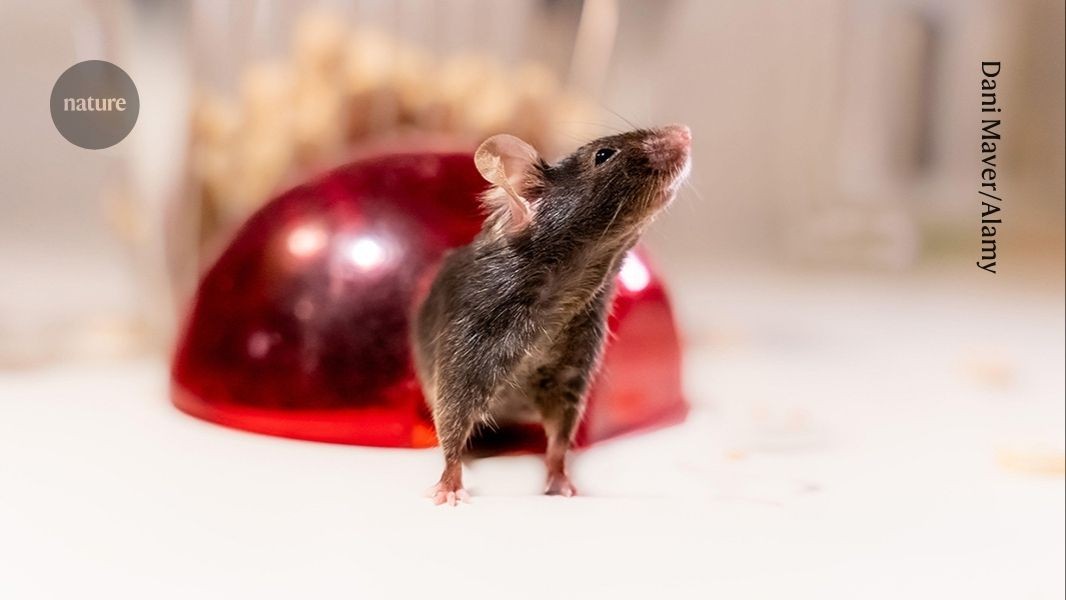
C57BL/6 mice, such as the one pictured here, are commonly used in animal research. Credit: Dani Maver/Alamy
Half of laboratory mice are not what scientists think they are, a genetic analysis of hundreds of strains that are distributed globally for animal research has found.
The study, published today in Science1, uncovered widespread inconsistencies between the reported names of mouse strains and their actual genetic makeup. The mismatches have the potential to compromise the reproducibility of mouse studies and undermine research conclusions, scientists say.
“This study is another wake-up call for biomedical research. If we don’t fully understand the genetics of the mice we’re using, we risk misinterpreting how diseases actually work,” says Daniel Rawle, an immunologist at the QIMR Berghofer research institute in Brisbane, Australia.
Rawle has first-hand experience of the trouble that a mislabelled mouse strain can cause. In a 2022 study2, he and his colleagues uncovered discrepancies in the genotypes of mice engineered to lack an immune protein called granzyme A. The errors had given researchers the false impression that deletion of the gene encoding granzyme A protected mice from a crippling type of arthritis caused by infection with the chikungunya virus3.
Such problems can emerge when scientists try to move a genetic manipulation, such as a gene deletion or ‘knockout’, from one mouse strain to another, says Fernando Pardo-Manuel de Villena, a mouse geneticist at the University of North Carolina at Chapel Hill, who led the project reported on today in Science.
Genetic blurring
Inbred mice used in animal studies have a plethora of genetic ‘backgrounds’, with different strains, such as C57BL/6 and A/J, being used in different areas of research. Introducing one genetic change — such as a gene knockout — into a mouse strain requires cross-breeding mice over 10–20 generations, while keeping meticulous records to ensure that errors aren’t made.
Cutting corners can cause problems. For example, if this cross-breeding process is not completed fully, genetic variation in the donor knockout strain can be retained in the recipient — meaning that the genetic differences between mouse strains become less distinct. “Twenty generations is a long time and a lot of money,” says Pardo-Manuel de Villena.

Squeaky clean mice could be ruining research
To assess the scale of the problem, he and his colleagues assessed the genomes of hundreds of mouse strains, derived from live colonies maintained by a network of repositories called the Mutant Mouse Research and Resource Centers (MMRRC). The MMRRC was established by the US National Institutes of Health in 1999, with the aim of preserving and sharing mouse strains developed by federally funded researchers.
Using a genotyping platform designed to discriminate between mouse strains, the researchers surveyed 611 samples from 341 strains maintained by the MMRRC facility at the University of North Carolina. This analysis found that 47% of strains were inconsistent with how they had been described.