







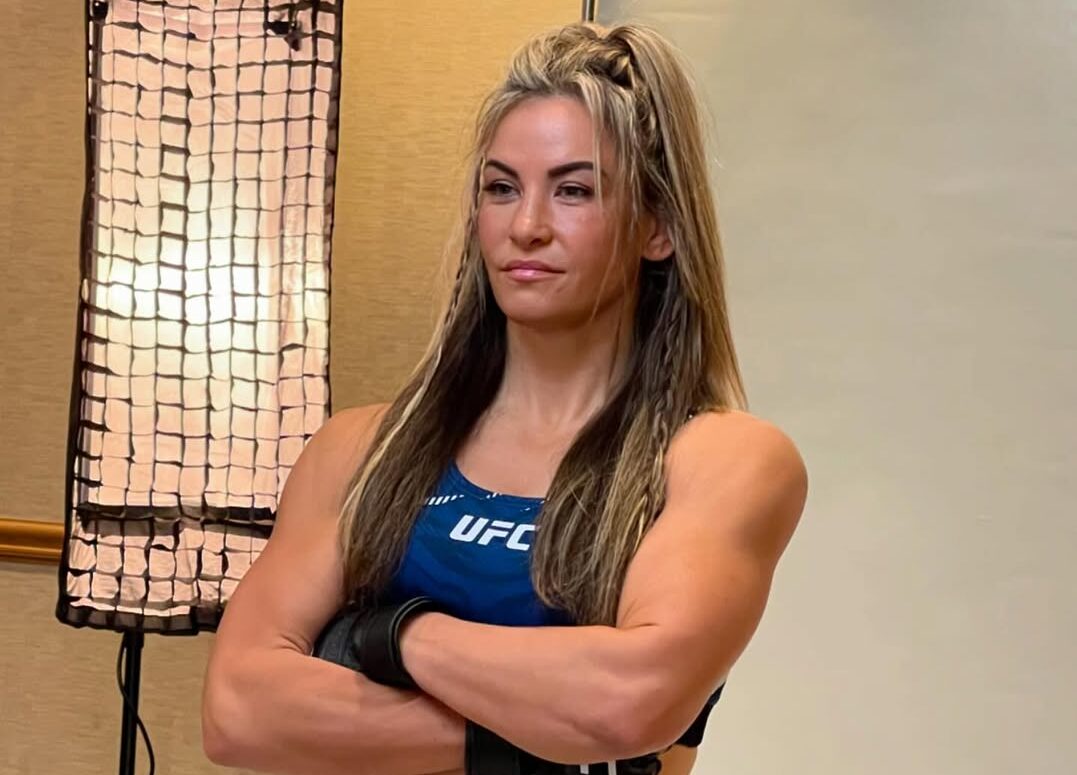
Miesha Tate laid out the full cost of becoming a UFC champion this week. The post reads like a list a lot of athletes will recognize, but few have said out loud.
The former Women’s Bantamweight champion posted on Instagram what her training actually looked like at peak competition: seven days a week, no days off. Undereating to stay lean. Dismissing low energy as a discipline problem. Training the exact same way through every phase of her menstrual cycle. Treating recovery like a character flaw.
“I used to think being tough meant overriding every signal my body gave me,” Tate wrote in the caption.
Real talk? That approach got her the belt. Tate is a former UFC champion, and that doesn’t happen without serious sacrifice. But she’s also being direct about what it cost her.
“That mindset helped me become a UFC champion,” she wrote. “It also taught me the hard way that pushing harder isn’t always pushing smarter.”
That line hits different coming from someone who actually won. Plenty of people talk about training smarter. Not many of them have been where Tate has. Her saying the push-through-everything approach has real limits carries weight. She’s not speaking from theory.
What she’s naming is something a lot of female athletes have lived through. The culture of silencing the body in the name of discipline runs deep in elite sports. It doesn’t always get examined from the inside. Tate is doing that work publicly, and it matters.
The hormone health piece deserves attention too. Tate flagged that she used to “train the same through every phase of my cycle.” Sports science is increasingly treating that as a significant gap in women’s training programs. Hormonal cycles affect energy, recovery, and injury risk. Performance follows. Programs built without accounting for that leave real gains on the table, and sometimes leave athletes with real damage.
Tate didn’t detail her exact current training plan, but the shift is clear. Recovery is part of the work now. Adaptation is the goal.
“Now? I train differently. I recover differently. And honestly… I’m stronger because of it,” she wrote.
The closing line probably landed hardest: “Your body isn’t asking you to quit. It’s asking you to adapt.”
That reframe is meaningful. Elite athletes spend so much of their careers learning to push past limits. Figuring out which limits to push is a different kind of work. Tate is signaling that the second lesson is just as hard-won as the first.
Tate has been open about her focus since her competitive UFC run. This post fits her current lane in health and wellness, but it’s grounded in something more specific than general inspiration. A former champion being honest about the tradeoffs she made and choosing to talk about them plainly. That’s a different kind of strength.
That kind of transparency is rare from athletes at her level. And it tends to land.