








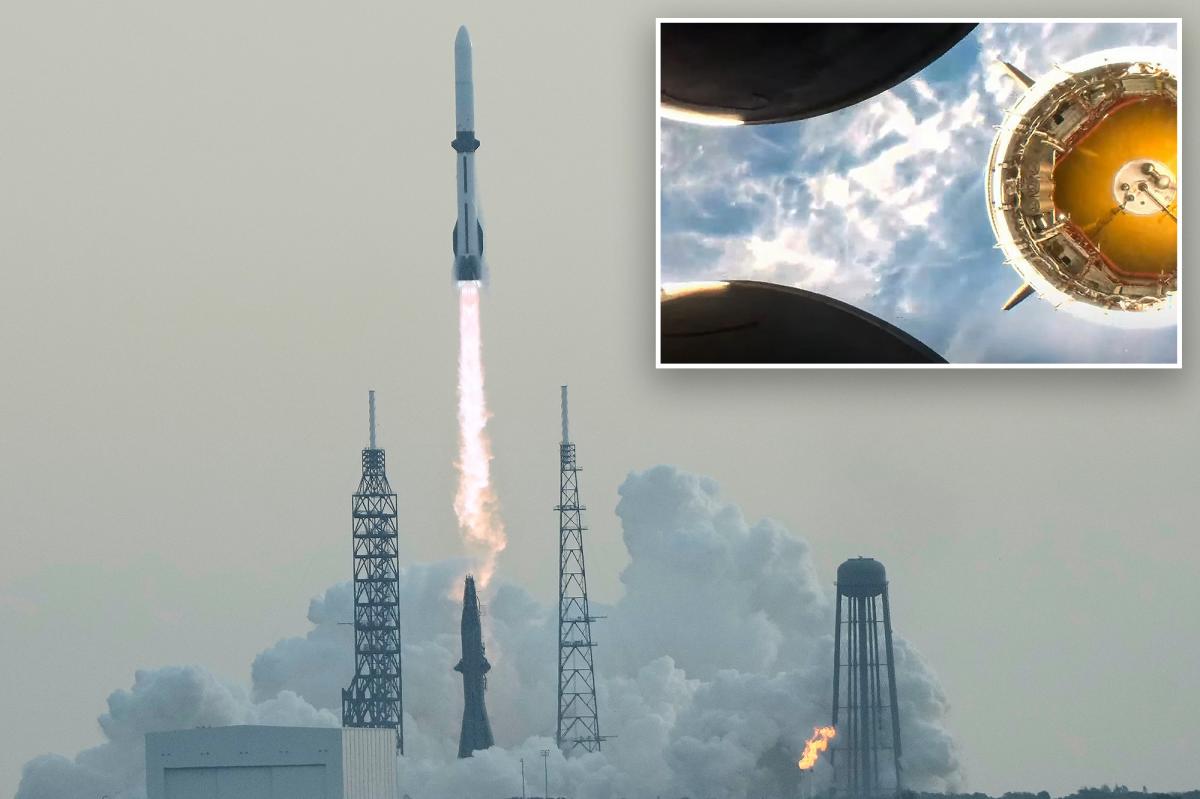
Jeff Bezos watched his space dreams take an unexpected detour this week. Blue Origin, the billionaire’s ambitious rocket company, launched a customer’s satellite straight into the wrong place.
The mishap unfolded like a high-stakes thriller gone wrong. One moment, everything looked perfect – the rocket roaring to life, climbing through Earth’s atmosphere with precision. The next moment, reality hit. The satellite that was supposed to reach its designated orbit found itself somewhere else entirely.
According to the New York Post, the commercial mission represented a costly misstep for Blue Origin. The company, which has been fighting tooth and nail to compete with SpaceX and other industry giants, can’t afford these kinds of mistakes.
This wasn’t just any routine launch. Commercial satellite deployments are the bread and butter of the modern space industry. Companies pay millions to get their equipment placed exactly where it needs to be. When that doesn’t happen, it’s not just embarrassing – it’s expensive.
Blue Origin has been positioning itself as a serious player in the commercial space race. The company’s New Shepard rocket has made headlines for carrying celebrities and billionaires on brief trips to the edge of space. But the real money lies in reliable satellite launches and other commercial services.
Bezos founded Blue Origin back in 2000 with grand visions of making space accessible. The company’s motto, ‘Gradatim Ferociter’ – step by step, ferociously – reflects his methodical approach to space exploration. But this week’s orbital miss suggests those steps might need some recalibration.
The satellite placement error comes at a particularly challenging time for Blue Origin. The company has been working to establish itself as a dependable alternative to Elon Musk’s SpaceX, which has dominated the commercial launch market. Every successful mission builds trust with potential customers. Every failure does the opposite.
Space launches operate on razor-thin margins for error. A satellite placed in the wrong orbit might still be recoverable, depending on how far off course it ended up. But the fuel required to correct the position could significantly reduce the satellite’s operational lifespan. That translates to real financial losses for Blue Origin’s customer.
The commercial space industry has become increasingly competitive over the past decade. Companies like SpaceX, Rocket Lab, and Virgin Orbit have all carved out their niches in the market. Blue Origin has been playing catch-up, trying to prove it can deliver the same reliability and precision as its more established competitors.
For Bezos, who stepped down as Amazon CEO to focus more on space ventures, this setback stings particularly hard. He’s invested billions of his own fortune into Blue Origin, betting that space commercialization represents the next great frontier for human expansion.
The satellite mishap also raises questions about Blue Origin’s quality control and mission planning processes. Orbital mechanics aren’t forgiving – there’s no room for approximation when you’re launching multimillion-dollar equipment into the void.
Industry observers will be watching closely to see how Blue Origin responds to this failure. The company’s reputation for reliability hangs in the balance. Future customers want to know their expensive satellites will end up exactly where they’re supposed to be.
Space is hard, as the saying goes in the industry. Even the most experienced companies occasionally face setbacks. But in the unforgiving world of commercial launches, there’s little tolerance for errors that could have been prevented.
Blue Origin hasn’t yet released detailed information about what went wrong or how they plan to prevent similar issues in future missions. That silence only adds to the mystery surrounding this costly orbital miss.