




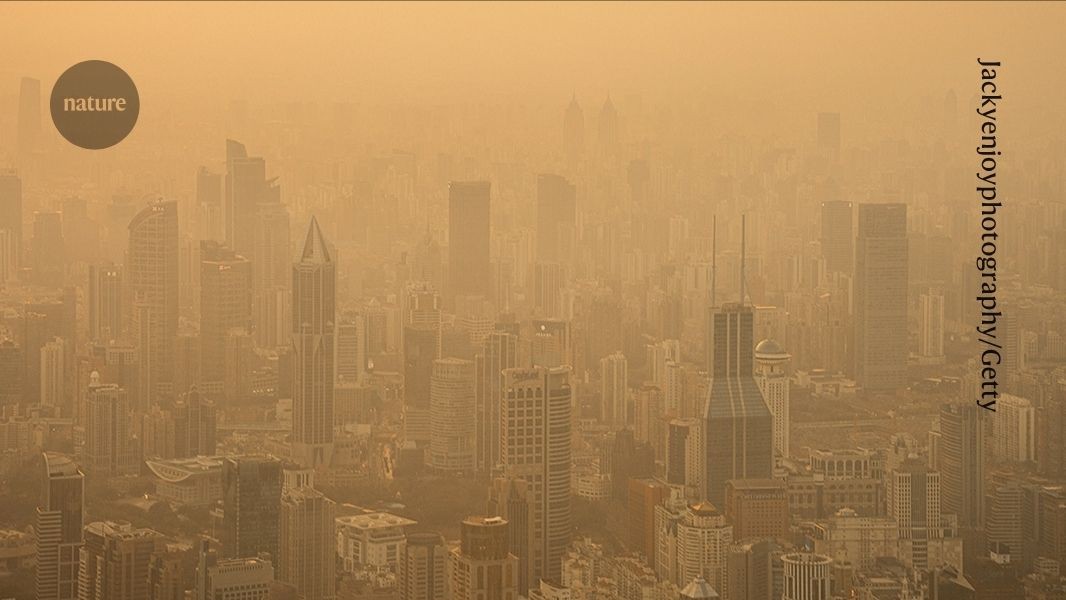
Beyond GDP indicators include measures of air (pictured here in Shanghai).Credit: Jackyenjoyphotography/Getty
The United Nations is considering 31 new indicators to “complement and go beyond” the world’s main measure of economic growth, gross domestic product (GDP).
The proposed new annual indicators include economic metrics such as household disposable income per person, and environmental data such as a country’s greenhouse gas emissions and levels of particulate matter in the air. Also included are health and education indicators such as life expectancy and children’s performance in reading and maths; as well as measures of wellbeing such as the proportion of women and girls subjected to physical and/or sexual violence. Fifteen of the 31 proposed indicators are already part of indicators for the UN’s Sustainable Development Goals (SDGs).
The new indicators are in a report, Counting What Counts, written by a multidisciplinary committee of researchers and policymakers, co- chaired by economists Kaushik Basu, based at Cornell University in Ithaca, New York, and Nora Lustig at Tulane University in New Orleans. The group was assembled last year by UN Secretary General António Guterres. Attempts to dethrone GDP, including by the UN, go back at least three decades but this is the first time that a UN chief has responded to such a request from member states. Speaking at a launch event at UN headquarters in New York City on 7 May, Guterres called the report a “landmark step in correcting a longstanding blind spot in measuring progress”.
What GDP is – and isn’t
There are different ways to measure GDP. According to one widely-used method, it is the sum of what a country’s households and governments spend and what businesses invest. The rules for how it is calculated are agreed by the UN Statistical Commission, which is a kind of parliament of the world’s national statistical agencies. But data are compiled and reported by individual countries. It is mentioned in numerous laws and is used as a benchmark in policymaking worldwide. Countries regularly report their defence, health and research spending as a percentage of GDP.
GDP growth is also often the main objective of a country’s economic policy. “It is now being used in ways its architects never intended,” Guterres said. “In my time as secretary-general, the size of the global economy has risen over 50 per cent, adjusting for inflation.” At the same time, many indicators for health, biodiversity, job-creation, human rights, peace “with conflicts now at levels not seen since World War II”, Guterres added, are going backwards.
Annalena Baerbock, UN General Assembly president, added that GDP increases when there are harms. “If many people in your country have accidents on the road or a chemical disaster, also this would at that moment increase your GDP because you have to do something to counter it.”
Mixed signals
The report has drawn mixed reactions from researchers and policymakers.
Rutger Hoekstra, who studies economic, environmental and social indicators at Leiden University in the Netherlands, describes GDP as “a flawed indicator of economic growth”. He adds that it’s important to see wellbeing, inclusion and sustainability recognized in the new plan as these “are superior measures of societal progress”.
Paula Caballero, regional director for Latin America at The Nature Conservancy, a conservation non-profit organization based in Arlington, Virginia, adds that the initiative has been a long time in the making. Caballero, a former diplomat from Colombia, was instrumental (with colleague Patti Londoño) in establishing the SDGs .
She says that discussions about moving beyond GDP were part of the SDGs’ negotiations, but that the idea was dropped as there were too many items on the agenda. GDP, she adds is “very short sighted”, as it does not account for the impacts of future growth, such as from climate change.
Stephen Polasky, an environmental economist at the University of Minnesota in Saint Paul, points out that some of the proposed environmental measures, notably biodiversity and natural capital, are limited. “I don’t object to anything that is included,” he says, but adds that there should have been more detail on the nature-related indicators. “Inclusion of biodiversity/environmental issues should be a major issue for a report that looks to go beyond GDP. It seems like a missed opportunity.”