







Scientist as Subject | Science

HomeScienceVol. 392, No. 6797Scientist as SubjectBack To Vol. 392, No. 6797 Full accessBooks et al.Podcast Share on Scientist as SubjectScience30 Apr 2026Vol 392, Issue 6797p. 472 PREVIOUS ARTICLEAnticipating the future in an algorithmic agePreviousNEXT ARTICLESupport besieged Iranian scientistsNext NotificationsBookmark ContentsInformation & AuthorsMetrics & CitationsView OptionsReferencesFigur… Source link
Read More

Scientists take centre stage at ‘alternative’ climate talks to phase out fossil fuels

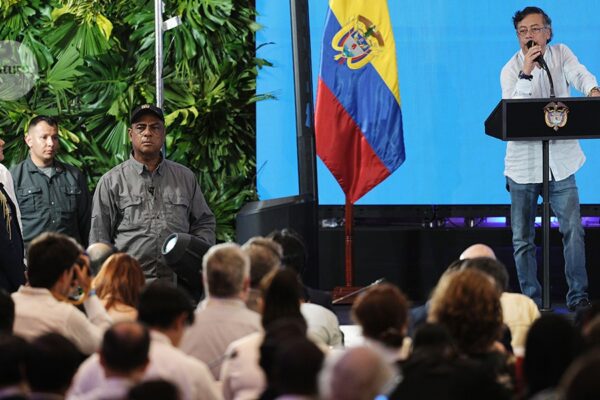
Colombian President Gustavo Petro spoke on 28 April at a climate summit hosted by his country.Credit: Ivan Valencia/AP Photo/Alamy Climate scientists, who have warned of the dangers of global warming for decades, have found some countries to listen. This week, representatives of more than 50 nations gathered in Santa Marta, Colombia, at what was billed…

Read More

Continuously graded-doped SnO2 for efficient n–i–p perovskite solar cells

Conventional n–i–p architecture remains a robust platform for scalable perovskite photovoltaics1,2, yet its steady-state efficiency has stagnated at ~26% (ref.3), lagging behind p–i–n counterparts4. This performance gap arises from persistent non-radiative recombination at textured electron transport layer (ETL)/perovskite interfaces, yet the underlying physical origin remains unclear. Here, we uncover that these losses originate from the…

Read More

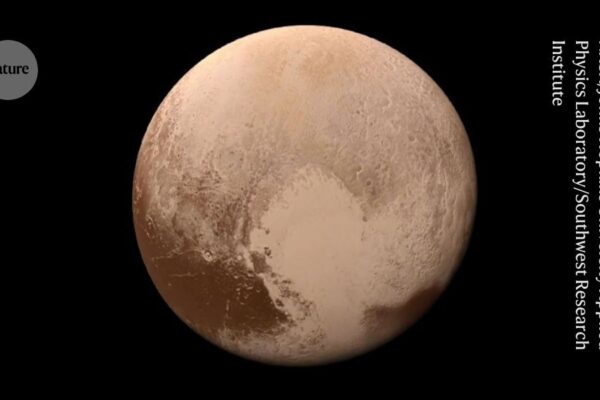
‘Make Pluto a planet again’? NASA chief revives debate that divides astronomers

Will Pluto become a planet again?Credit: NASA/Johns Hopkins University Applied Physics Laboratory/Southwest Research Institute Many of us are old enough to have grown up with nine planets orbiting the Sun. In 2006, however, a controversial decision within the astronomy community resulted in the official list being cut to eight, removing Pluto. On Tuesday, responding to…

Read More

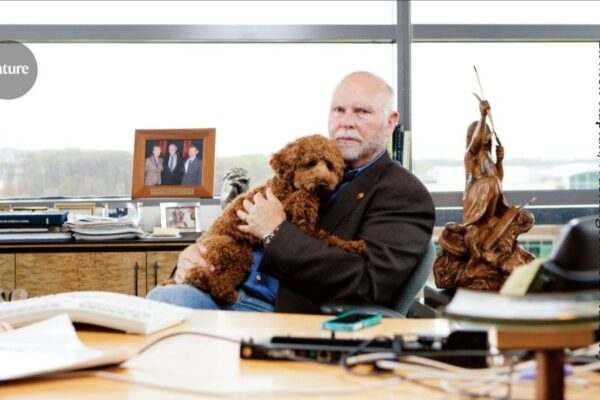
here’s how he transformed science

The ‘maverick’ scientist Craig Venter — who led a race to decode the human genome, pioneered a genome-sequencing method still used today, created the first organisms with synthetic genomes and sailed around the world recording microbial diversity — died on 29 April, aged 79. Venter is most well-known for leading a commercial effort to generate…

Read More

Scientists to return to Fukushima — this time to study disaster recovery

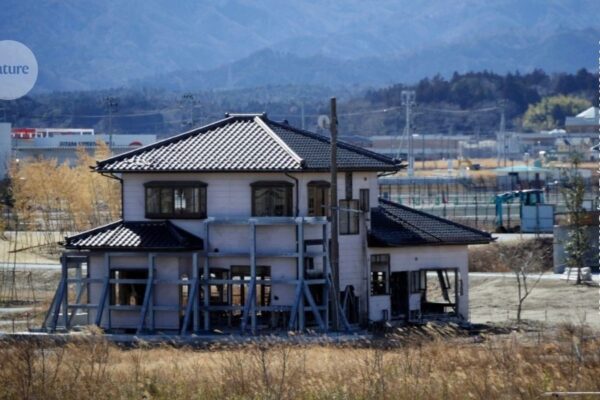
Radiation levels in roughly 2% of the Fukushima region, about 300 square kilometres, are unsafe for people.Credit: Franck Robichon/EPA/Shutterstock Fifteen years after Japan’s worst nuclear-power accident, construction is under way in Fukushima for a research institute that will focus on robotics, agriculture, the medical uses of radiation and environmental recovery from nuclear disasters. The Fukushima…

Read More