






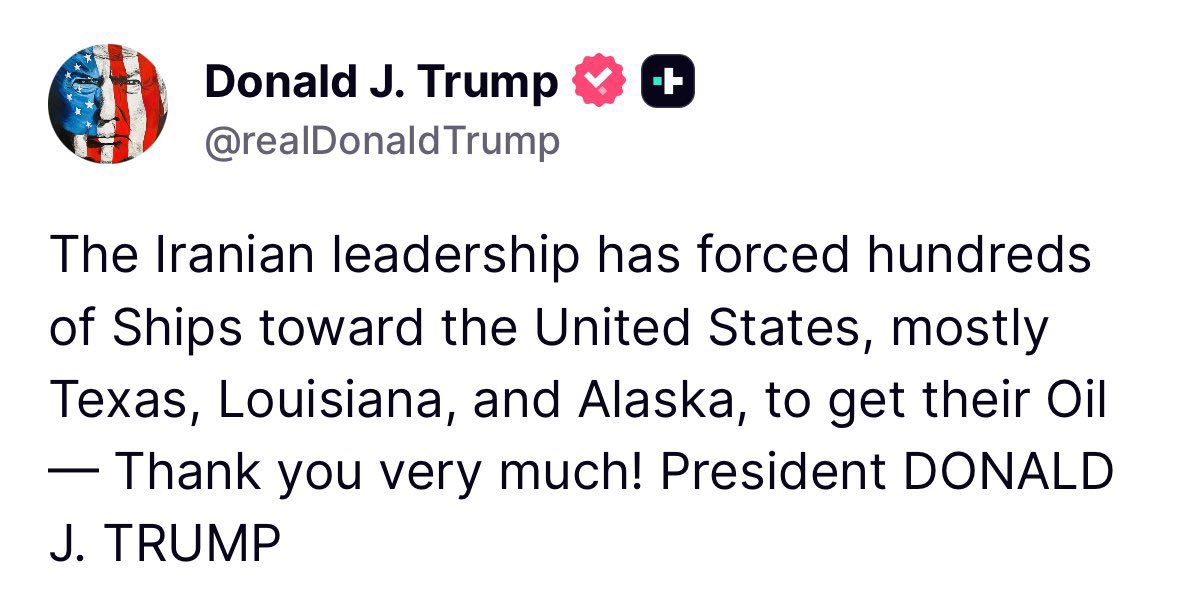
Donald Trump made a striking claim about Iranian naval activity near American shores. The former president and 2024 presidential candidate alleged that Iran’s leadership has forced hundreds of ships toward the United States.
According to a post shared by Breaking911 on social media, Trump stated that the ships are heading primarily toward Texas, Louisiana, and Alaska. He claimed these vessels are carrying oil shipments to American ports. Trump concluded his statement with what appeared to be sarcastic gratitude, saying ‘Thank you very much!’
The claim raises serious questions about maritime security and America’s oil supply chain. If true, it would represent a significant development in US-Iran relations. However, friends, let’s break down what this actually means for regular Americans.
Texas, Louisiana, and Alaska are major hubs for America’s energy industry. These states handle massive amounts of oil imports and exports every day. Louisiana alone processes millions of barrels through its Gulf Coast refineries. Alaska’s ports serve as crucial gateways for oil shipments heading to the lower 48 states.
For folks living in these coastal communities, increased ship traffic isn’t just a political talking point. It’s about jobs at the ports, environmental concerns, and local economic impact. More ships mean more work for longshoremen, port workers, and maritime crews. But it also means potential risks to local waterways and fishing industries that families depend on.
Trump’s statement came without additional context or verification from independent sources. Iranian officials haven’t responded to the claims as of today. The US Coast Guard and Department of Homeland Security also haven’t issued any public statements about unusual maritime activity near American shores.
The timing of Trump’s statement is worth noting. Oil prices have been a hot topic in American politics, affecting everything from gas station prices to heating bills. When politicians make claims about foreign oil shipments, it often connects to broader debates about energy independence and national security.
Social media reaction to the Breaking911 post was relatively muted. The tweet received 221 likes and 28 retweets, suggesting the claim didn’t generate massive online buzz. That’s pretty low engagement for a statement involving potential national security implications.
This isn’t the first time Trump has made bold statements about Iran’s activities. Throughout his presidency and beyond, he’s frequently criticized Iranian leadership and their policies toward the United States. His administration previously imposed strict sanctions on Iranian oil exports.
The relationship between America and Iran remains complicated. Oil trade between the countries has been heavily restricted since Trump reimposed sanctions during his presidency. If Iranian ships are indeed approaching US ports with oil, it would mark a significant shift in that dynamic.
For everyday Americans, the bigger picture matters more than political rhetoric. Oil shipments affect gas prices at the pump. Maritime security impacts coastal communities. International relationships shape economic opportunities.
Right now, though, we’re dealing with an unverified claim that raises more questions than it answers. How many ships exactly? What type of oil? Are these shipments legal under current sanctions? Who authorized them?
Without concrete evidence or official confirmation, Trump’s statement remains just that – a statement. Americans deserve clear, factual information about potential threats to national security or changes in energy policy.
The story highlights how quickly unverified claims can spread in today’s media environment. Whether you support Trump or not, his statements often generate headlines and social media discussion. In this case, the limited online reaction suggests people might be waiting for more solid information before drawing conclusions.
Until we get verification from maritime authorities, coastal residents, or Iranian officials, this remains an intriguing but unconfirmed development in US-Iran relations.