





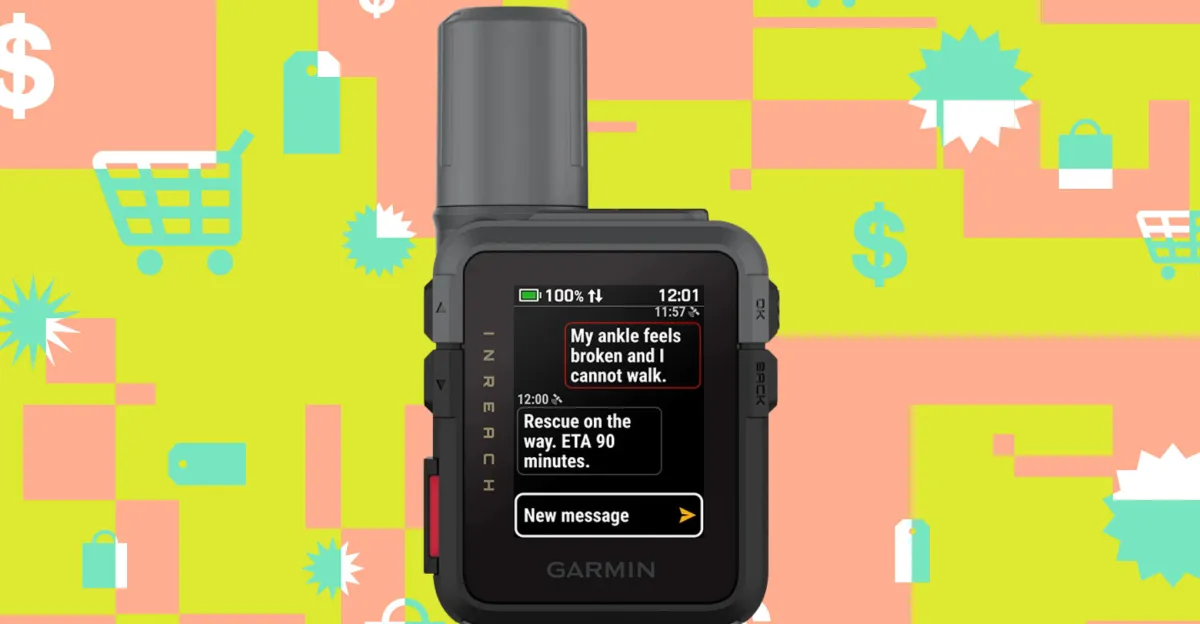
REI’s annual Anniversary Sale doesn’t start until March 15th, but that hasn’t stopped Garmin from rolling out discounts on a range of devices — including its InReach Mini satellite communicators. Right now, for instance, you can grab the Mini 2 at Amazon, REI, and Garmin for $249.99 ($150 off) or the Mini 3 for $399.99 ($50 off) through the same retailers (Amazon, REI, and Garmin). That’s the lowest price we’ve seen on the newer InReach model, which launched in late December.
As someone who has used both the Mini 2 and Mini 3 in the backcountry, I’m a big fan of dedicated satellite communicators over smartphones, even those with support for satellite SOS and messaging. Both the Mini 2 and Mini 3 are far more rugged than your average phone, for one thing, and each device offers multi-day battery life, which certainly isn’t the case with iPhone 17-series phones and Google’s newer Pixel phones. They also operate in higher temperatures and allow you to pull the weather report, which is a massive plus when you’re off the grid and exposed to ever-changing weather patterns.
The core functionality of the Mini 2 and Mini 3 is largely the same, however. The two palm-sized satellite communicators leverage the Iridium satellite network for coverage, allowing you to send text messages, share your location, and even trigger SOS alerts in the event of an emergency. The big differences between the last-gen model and the Mini 3 are that the latter features a color touchscreen interface, which makes it far easier to navigate menus and type messages (the Mini 3 Plus also adds support for photos and voice messages).
Keep in mind that whichever model you choose, you’ll need to sign up for one of Garmin’s InReach Consumer Plans, which start at $7.99 a month for the most basic plan. Each tier requires a $39.99 activation fee and includes a set number of messages per month; however, if you run out, you’ll have to pay an additional fee per message (live tracking always costs extra). Personally, I’ve never found the messaging limits to be that restrictive — my aim in the backcountry is to avoid copious amounts of human contact — but it’s something to keep in mind if you’re planning a longer trek in the woods or need more constant communication with someone back home.