


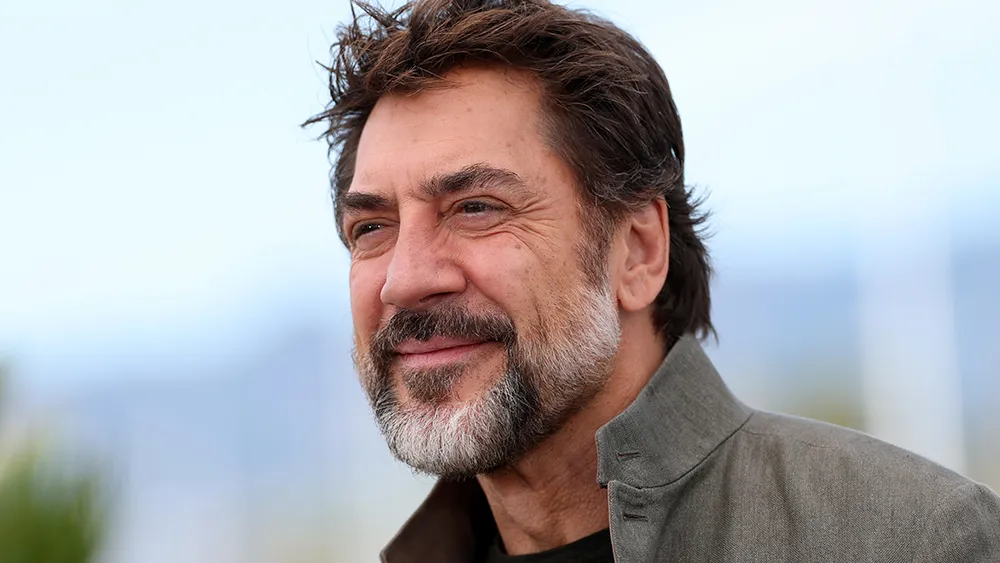
Javier Bardem thinks the tide is turning in terms of speaking up for Palestine in Hollywood, telling a Cannes Film Festival press conference on Sunday that “everyone is beginning to realize … this is unacceptable.”
The Oscar-winning Spanish actor, who is at Cannes with his latest film “The Beloved,” was asked immediately if he has any fear of suffering consequences in his career for denouncing the war in Gaza. Bardem has been one of the most outspoken actors on the topic, taking the opportunity at the Oscars to say “Free Palestine” while presenting the award for best international feature film.
“The fear does exist, granted, but one has to do things even if you feel a bit scared or afraid,” he said. “You have to be able to look at yourself in the mirror, look at yourself in the eyes and that was my case. My mother taught me to be the way I am. There is no plan B. This entails consequences, which I am fully ready to shoulder.”
Bardem noted that he “can’t corroborate” that there is an actual blacklist, and has actually continued to receive many offers all over the world which makes him believe that “things are changing.”
“Everyone is beginning to realize — thanks to the younger generation who is more aware of situations we’re experiencing quite directly on our phones and on other screens — this is unacceptable. It cannot be justified. And there can be no reason, no explanation for this genocide,” he said. “Therefore, I think what is happening is quite the contrary. I believe that those who are drawing up the so-called blacklists will actually be exposed, and they will be the ones suffering the so-called consequences, at least on a public and social level. And this is a major change.”
Asked later in the conference for his thoughts on democracy, Bardem also hit out at the Paramount and Warner Bros. merger. “I believe that there is an increasing monopoly in the world of information, that’s one of the problems that we note given Paramount and Warner Bros. and their merger, for example,” he said. “In terms of information, who is actually going to control all of this, what we’re listening, what we’re seeing? So I think that is very clear and is growing in importance with tech and social networks and rapid, summed-up messages which are very populist. They indeed have an impact on the young generation. That concerns me no end. We have to ensure the younger generation continues to think, apply reason, they need to understand, to compare, to check information. if they don’t it’s very dangerous, indeed.”
Bardem told Variety in a recent cover story that he’s “always felt that I have microphones and recorders recording my voice, and I have the right to denounce what I think is wrong.” Though there’s been chatter about celebrities who speak up about Gaza being put on a blacklist, the actor said he’s felt as much support as backlash.
“Some people will put you on a blacklist. I cannot tell you if that’s true or not — I don’t have the facts,” he said. “What I do have the facts about are the new people that are calling you because they want you in their project. That makes me feel that the narrative that they’ve been using for so long is changing.”
Bardem is at Cannes with his new film “The Beloved,” which earned a seven-minute ovation at its premiere on Saturday night. Directed by Rodrigo Sorogoyen, “The Beloved” sees Bardem play a legendary director who offers his estranged daughter (Victoria Luengo) a role in his latest film under the pretext of helping her with her stalled acting career. But while working together on set brings them closer together than they have been for years, it also reopens old wounds.