








Offbeat
Powders, gels, and fermented nutrients could someday join the battlefield menu
Eating in the field has never been fun for US Army soldiers. And they may soon face even stranger field rations than they do today: Alternative proteins delivered in formats ranging from powders and sauces to gels and semi-solids.
The Army on Monday published a sources sought announcement to gather submissions from interested industry and academic partners in the “alternative protein sector,” willing to help the branch develop rations that are lighter weight, have a longer shelf life, and could potentially be produced in combat-forward environments.
According to the announcement, the Army is looking for submissions covering four areas: Technologies for developing alternative proteins, like fermentation and other biomanufacturing methods, meat alternative products for ration inclusion, consumer research seeking to “enhance the acceptability … of alternative proteins within a military population,” and food samples for government taste and performance evaluations.
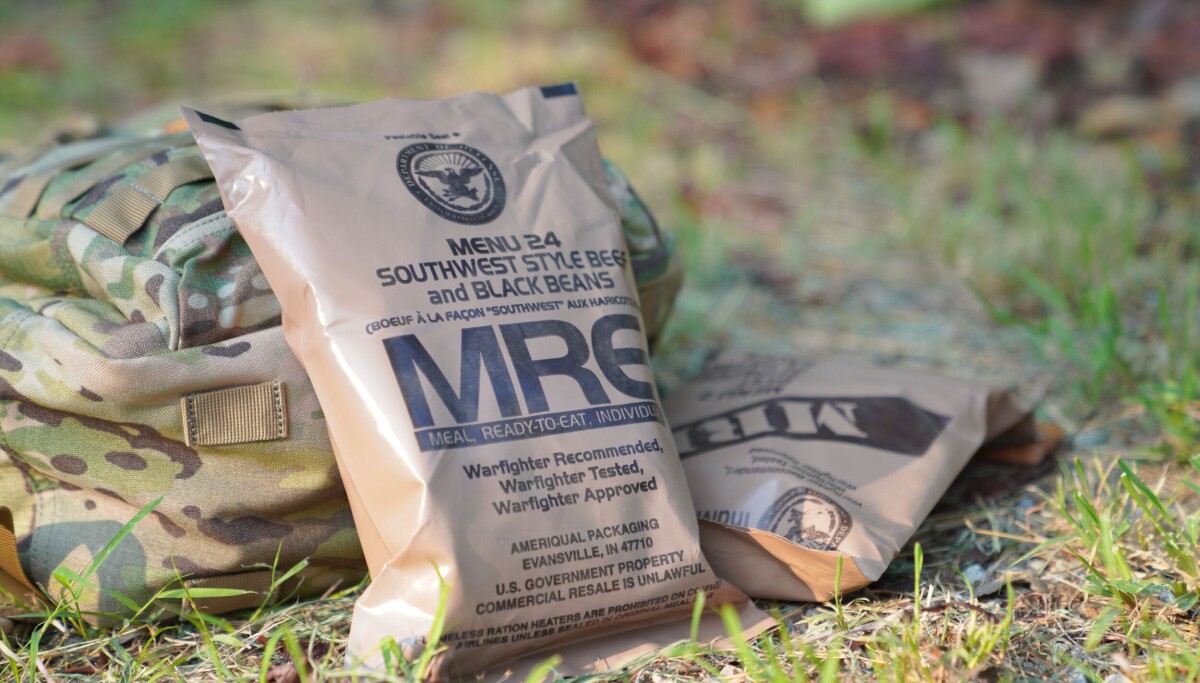
As an added element, the Army said that it wants ration products that meet its existing “stringent requirements for nutrition, shelf stability, and palatability,” though anyone who has served in the US Army and eaten field rations may have doubts about the military branch’s commitment to palatability on its Meal, Ready-to-Eat (MRE).
As a US Army veteran, this vulture can attest to an unfortunate level of familiarity with MREs, circa 2002. Beef frankfurters were famously one of the worst, as was the so-called “beef steak” meal that was more like a compressed loaf of meat leavings than an actual steak. The flavor didn’t matter at the end of the day, though, when you’d just marched 15 miles carrying 75 pounds on your back: You just needed sustenance, and even that five pack of frankfurters with a taste I shudder to recall sounded good under the right circumstances.
The MRE menu lineup, which has changed several times in the past 20 years, includes a few vegetarian options, and it’s those that make one of the Army’s requirements for this program so surprising. Civilians might be surprised to learn how popular the non-meat meals were, even among hardcore carnivores.
The four or so vegetarian options in the overall MRE lineup were always the first to go when I was in. Not only did they replace military mystery MRE meat with something more appealing to eat out of an envelope, but they were actually tasty – relatively, of course. Vegetarian MREs also tended to be slightly less calorically dense than their animal-derived counterparts, so they included extra bits that made them an even bigger hit.
Whether that would translate into soldiers embracing alternative proteins in future MREs isn’t a guarantee, of course. Most weren’t choosing the veggie MREs for alignment with their personal ethics so much as that they wanted a meal that didn’t suck.
The Army’s goal of developing “lightweight and nutrient-dense ration solutions to reduce logistical burdens and physical load on warfighter” through the program is definitely a noble one. MREs get heavy quickly if you’re on a long field expedition, but the openness the Army is leaving in the announcement doesn’t make it sound like appetizing solutions could be the first to come out.
“Gel/semi-solid formats, dry powder mixes, [and] sauce-style components” are all on the table, with the Army saying the format of “novel ready-to-eat formats … is at the offeror’s discretion.”
In other words, future ration components could include gel packs stuffed with fermented mushroom protein and other nutrients, some form of unholy shake, or whatever else food scientists can come up with.
Interested parties will need to move fast, though: As a sources sought announcement, this isn’t a solicitation, includes no promise the ideas will be given a research grant or procurement dollars, and has to be in by Friday, May 15, with no assistance from the government.
The submissions the Army receives could help shape future solicitations in this space, however, meaning the MRE we currently know and … love … may eventually evolve into something rather more futuristic. Hopefully it tastes a bit better.
One thing that soldiers will probably be thrilled about? No bugs in whatever field rations come next.
“We are specifically excluding solutions related to cell-cultured, lab-grown meat or insect protein,” the Army said, though we note that’s only for the purposes of this particular announcement, so tomorrow’s soldiers might still be subsisting on crickets and ants. ®