







Cannes. The word alone instantly conjures visions of cinema gods and goddesses, decked out in haute couture, ascending the red-carpeted steps of the Palais amidst a flurry of flashbulbs and thousands of screaming fans. But as the festival enters its 79th year, Cannes is looking less star-studded than usual, with the major studios sitting this one out.
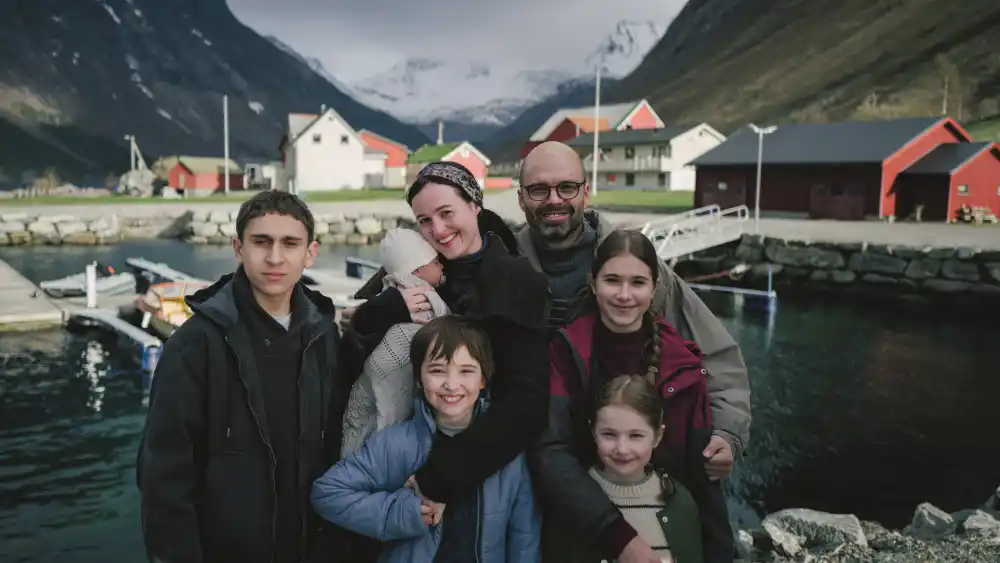
Neither summer blockbusters like Christopher Nolan’s “The Odyssey” and Steven Spielberg’s “Disclosure Day,” nor predicted Hollywood awards contenders like Alejandro G. Iñárritu’s “Digger” and David Fincher’s “Cliff Booth” will hit the Côte d’Azur. Instead, it will fall to international auteurs like Cristian Mungiu (“Fjord“), Paweł Pawlikowski (“Fatherland”) and Nicolas Winding Refn (“Her Private Hell”) to provide the sizzle.
The reason for the diminished presence is complicated. In some cases, major U.S. films weren’t finished in time to screen; in others, studios didn’t see the point of spending millions to promote movies that won’t hit theaters for months, and could arrive having been lustily booed by those notoriously tough French critics.
“Cannes is the premiere showcase of the year for foreign language film,” says John Sloss, founder of Cinetic Media and a veteran sales agent. “It has always been challenging for American awards-related films because of where it falls in the calendar.”
But Cannes won’t be completely devoid of glamour. It helps that some of the foreign films, like Mungiu’s “Fjord” and Refn’s “Her Private Hell” feature stars like Sebastian Stan, Charles Melton and Sandra Hüller, while the festival jury boasts Demi Moore.
While studio executives may not need to pack their gowns and tuxes for any big premieres, they will still head to the South of France looking to acquire titles to fill out their 2026 and 2027 slates. After all, Cannes isn’t just a festival; it’s also an active market, with distributors sifting through projects in various stages of development, from finished films to packages with scripts and top talent that still need to be shot. This year has a list of buzzy projects that seem promising on paper. They range from schlocky action films like “John Doe,” the latest testosterone-fueled outing from “The Beekeeper” team of Jason Statham and David Ayer, to prestige fare such as “A Woman in the Sun,” a multi-generational saga with Oscar winners Renée Zellweger and Sissy Spacek, and “The Passenger,” a World War II thriller uniting Jeremy Strong and “The Girl With the Needle” director Magnus von Horn.
The question is how willing studios, particularly indie players, may be to shell out money, given how long the theatrical market has taken to recover from COVID. But things may finally be turning a corner with domestic grosses up more than 20% year-over-year, thanks to hits like “Michael” and “The Devil Wears Prada 2.”
“On the independent side, there’s a lot of insecurity out there, even though you can see a lot of the independent movies are working and the box office is up,” says Oliver Berben, CEO of Constantin Film AG.
Berben believes that attitudes could improve, having recently returned from CinemaCon, the annual trade show for movie theater owners, which was held in Las Vegas last month.
“You could finally feel, after all these months, positive vibrations towards the cinema business,” Berben says.
The problem, some distributors say, is the wealth isn’t being evenly distributed. There have been hits from both the indie and major studio, but the number of flops has far outnumberd the success stories. More troubling, the delta between a smash and a dud has never been wider. Recent indie releases like “Christy” or “Dead Man’s Wire,” for instance, couldn’t crack $4 million globally despite featured stars like Sydney Sweeney and Bill Skarsgård.
“It’s become more binary,” says Kent Sanderson, CEO of Bleecker Street Media. “Either something really connects with audiences, or it doesn’t. The market overall is stronger than it was a year ago, but it’s driven by the films that work. And the films that don’t work, really don’t work.”
Distributors and sales agents believe the audience for movies, particularly arthouse fare, is shifting. Historically, these types of films attracted older moviegoers, who loved stiff-upper-lip dramas of the Merchant-Ivory variety. After the pandemic, those ticket buyers steered clear of the multiplexes, only to be replaced by a rising generation of film lovers who have turned the likes of “Marty Supreme,” “Longlegs” and “Materialists” into unlikely hits, and who worship at the altar of A24 and Neon.
“Specialty film is getting much more genre-oriented because the audience is getting younger,” says Scott Shooman, the head of Independent Film Company. “They like a mash-up. They don’t like a movie to be put in a box. They want something unique with a story that feels fresh.”
Producers are getting that message. Manifest Pictures, a new company launched this year by Yvette Zhuang and Zach Glueck, former sales executives at Miramax and WME Independent, is hitting Cannes for the first time. Its slate reflects the industry’s attempts to crack the Gen Z-code, with projects including “A Body in the Woods,” a folk horror story led by Emma Roberts, and “Bull,” an erotic thriller featuring Dylan O’Brien, Lewis Pullman and Kaia Gerber.
“We’re responding to how well films like ‘The Housemaid’ and ‘Wuthering Heights’ have done at the box office,” says Zhuang. “Modern audiences are hungry for this type of content. They want things that are very loud, very buzzy, and have scenes that will hit the culture in a big way, like ‘White Lotus’ and ‘Saltburn’ did.”
“We need to get people excited,” Glueck says. “We need people coming out of the theater texting their friends and being like, ‘Holy shit. I don’t know if you were planning to go to the theater this weekend, but you need to see this.’”
Then there’s the fact that the people deciding whether or not to buy a film are changing along with the audience. There’s been an influx of new distributors like Black Bear, which backed “Christy” and the upcoming Guy Ritchie thriller “In the Grey,” as well as Sumerian Pictures, which nabbed the acclaimed Channing Tatum and Gemma Chan-led drama “Josephine” out of Sundance.
“There are more distributors than in memory, but their health is going to be tied to how indie films are faring at the box office overall,” says one veteran sales agent. “The survival rate for these companies isn’t great.”
Indeed, Row K, which launched last summer and spent a lot of money buying “Dead Man’s Wire,” the Maude Apatow rom-com “Poetic License” and a “Cliffhanger” reboot out of the Toronto Film Festival, is already battling reports that its finances are in disarray.
On the major studio side, things have never felt more in flux. Disney’s buy of much of 21st Century Fox in 2019 already knocked one big buyer off the board, and now Paramount has a deal in place to purchase Warner Bros. Discovery, which could make it even harder to spark bidding wars.
“Consolidation plays a role,” admits Imagine Documentaries president Sara Bernstein, who will be at Cannes looking to sell the Ron Howard documentary “Avedon.” “The commissions are fewer than they were a few years ago,” she adds, calling it “a condensed market.”
“Avedon” is one of the few films playing at the festival that is trying to land distribution, joining the likes of the Ira Sachs drama “The Man I Love,” a look at gay life in ’80s New York, and Lukas Dhont’s World War I drama “Coward.” But the majority of the most prominent films in the festival lineup — from Pedro Almodovar’s “Bitter Christmas” to Asghar Farhadi’s “Parallel Tales” — arrive with distributors. Neon, which has won the Palme d’Or for a record-breaking six consecutive times, is leaving little to chance. The company will have nine films at the festival, ranging from Ryusuke Hamaguchi’s “All of a Sudden” to Na Hong-jin’s “Hope” and James Gray’s “Paper Tiger.”
“The streak is a funny thing that has happened, but whether we win the Palme or not, I feel quite confident that we have a slate of films this year that people are going to be really excited about,” says Jeff Deutchman, Neon’s president of acquisitions, production and development. “It’s very nice to win the Palme d’Or. It puts a big spotlight on the film, but what we’ve seen in recent years is that some of the films that haven’t won have had quite a nice life as well.”