




Engineering resilient food systems in a warming world

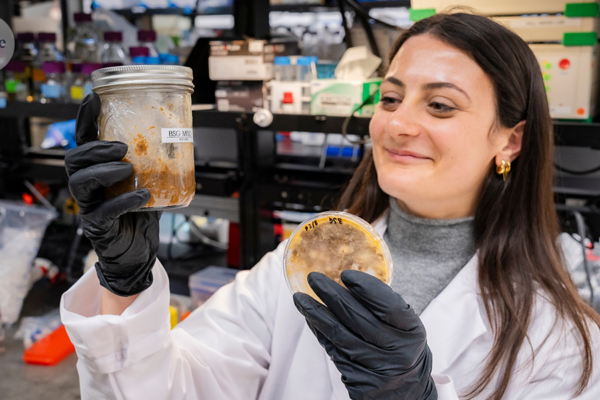
Gastronomic scientist Alessandra Massa, at the Hill-Maini laboratory at Stanford University, holds up a culture of the edible fungus Neurospora intemerdia, grown on brewery waste, and a jar containing savoury miso paste made with this material.Credit: Franklin Lurie Beyond rising seas, displaced communities and disrupted livelihoods, climate change is increasingly threatening the foundations of food…
Read More

Are microbes the future of pollution clean-up?

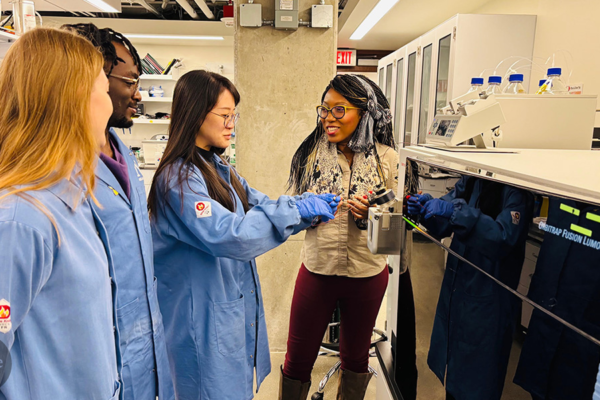
Environmental engineer Ludmilla Aristilde (right) and her colleagues work on developing biotechnology-led solutions to combat pollution.Credit: Benjamin Barrios-Cerda/Aristilde lab Ludmilla Aristilde has always been aware of how closely tied well-being is to the world around us. Raised in Haiti, she and her family survived two cholera outbreaks stemming from contaminated water. “These were my earliest…

Read More

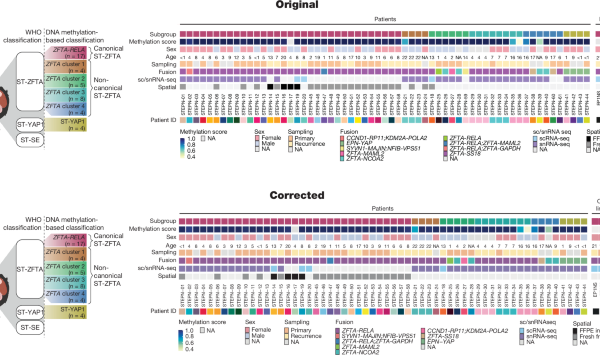
Author Correction: Multidimensional profiling of heterogeneity in supratentorial ependymomas

These authors contributed equally: Daeun Jeong, Sara G. Danielli These authors jointly supervised this work: Kristian W. Pajtler, Varun Venkataramani, Mariella G. Filbin Department of Pediatric Oncology, Dana-Farber Boston Children’s Cancer and Blood Disorders Center, Boston, MA, USA Daeun Jeong, Sara G. Danielli, Li Jiang, Shashank Katiyar, Costanza Lo Cascio, Sina Neyazi, Carlos Alberto Oliveira de Biagi-Junior, Elsa Couvillon, Sophia Castellani, Maria Pazyra-Murphy, Matthew Mullally, Bernhard…

Read More

‘Alternative COP’ must drive real, cooperative change in climate action

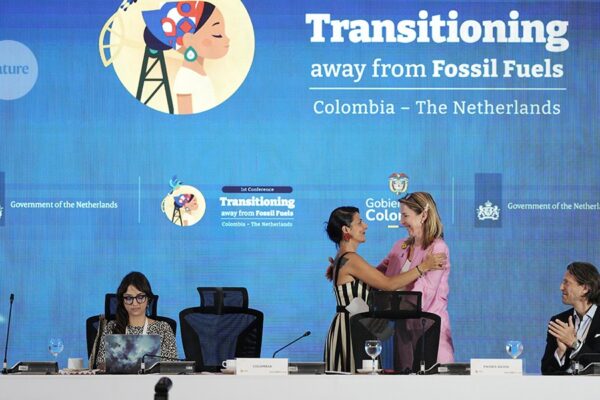
You have full access to this article via your institution. Colombia’s environment minister Irene Vélez Torres (left) with her Netherlands counterpart Stientje van Veldhoven in Santa Marta, Colombia.Credit: Ivan Valencia/AP Photo/Alamy An important international climate-change initiative was launched last week: more than 50 countries gathered in Santa Marta, Colombia, for the First Conference on Transitioning…

Read More

Are attention spans really shrinking? What the science says

A century before social-media bans and advice to disable device notifications, the inventor and science-fiction writer Hugo Gernsback proposed a more extreme way to avoid distraction: an isolating wooden helmet. Outside influences, he said, were “the greatest difficulty that the human mind has to contend with”. Gernsback’s isolator device — part diving suit, part monastic…

Read More

NIH grant cuts disproportionately hit minority and female scientists

Grants terminations requested by the administration of US President Donald Trump last year disproportionately affected researchers from under-represented groups, a survey suggests.Credit: Loic Venance/AFP via Getty The abrupt termination last year of thousands of research grants by the US National Institutes of Health (NIH), the world’s largest public funder of biomedical research, didn’t affect all…

Read More