





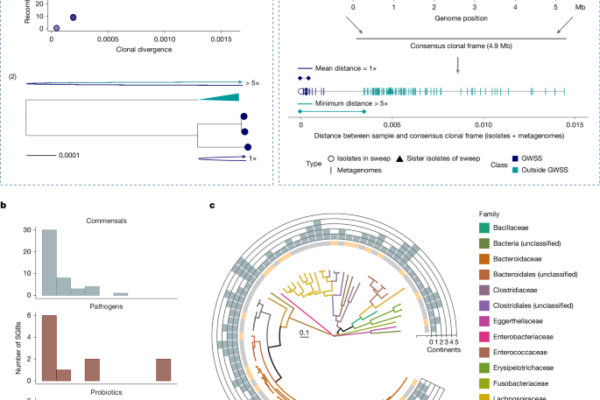
Genome-wide sweeps create ecological units in the human gut microbiome

Isolate genome collection A total of 19,837 publicly available isolate genomes were collected and consisted of the entire data in the Unified Human Gastrointestinal Genome (UHGG) catalogue45 (v.1.0, 10,648 genomes) and 4 large-scale culturomic studies28,46,47,48. Furthermore, a group of 186 isolates from Austrian individuals were newly collected and sequenced. A total of 50 patients undergoing…
Read More

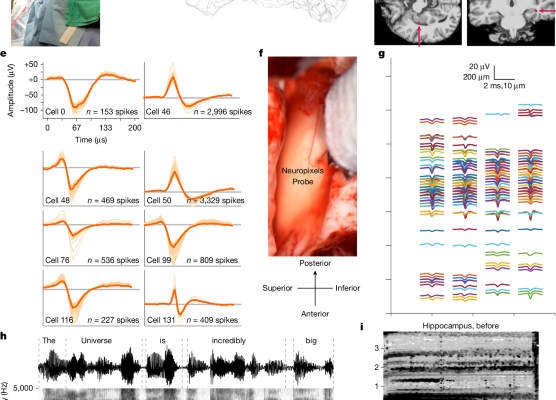
Plasticity and language in the anaesthetized human hippocampus

Patient recruitment Experiments were conducted according to protocol guidelines approved by the Institutional Review Board for Baylor College of Medicine and Affiliated Hospitals (H-50885 for the Neuropixels recordings and H-18112 for the EMU recordings). All of the recruited patients for the Neuropixels recordings were diagnosed with drug-resistant temporal lobe epilepsy and were scheduled to undergo…

Read More

the mysterious ‘dark’ proteins that might play a big role in biology

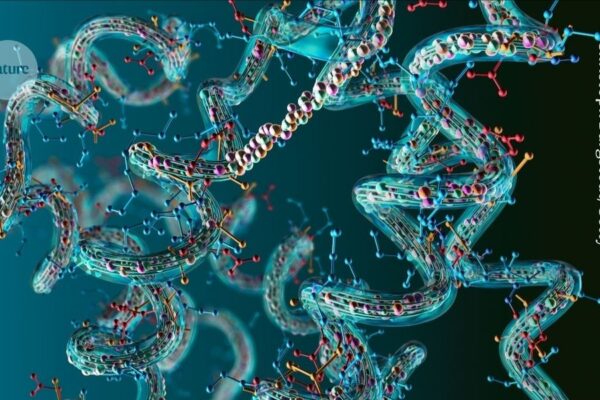
Some proteins (artist’s illustration) are being reclassified in databases as a result of the latest findings.Credit: Christoph Burgstedt/Getty The human genome contains around 20,000 genes that hold instructions for making working proteins, as most genetic databases now indicate. However, some scientists say there might be thousands more ‘dark proteins’ with unknown but potentially important roles…

Read More

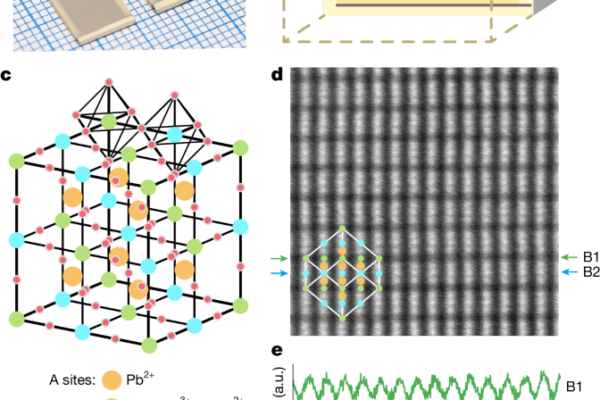
Two-qubit logic and teleportation with mobile spin qubits in silicon

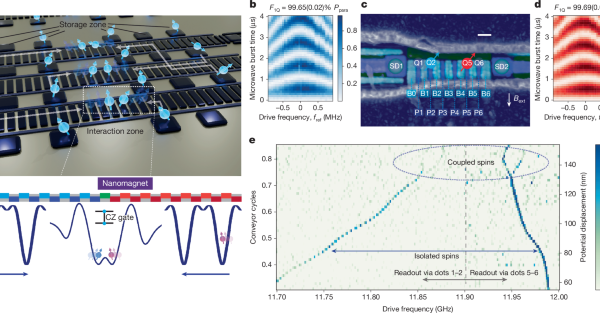
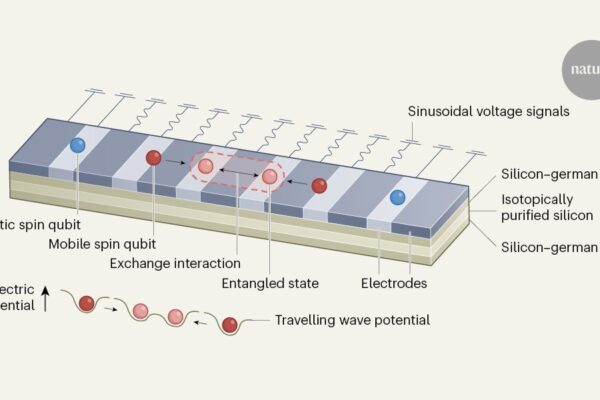
Bravyi, S. et al. High-threshold and low-overhead fault-tolerant quantum memory. Nature 627, 778–782 (2024). Article  ADS  CAS  PubMed  PubMed Central  Google Scholar  Xu, Q. et al. Constant-overhead fault-tolerant quantum computation with reconfigurable atom arrays. Nat. Phys. 20, 1084–1090 (2024). Article  CAS  Google Scholar  Goto, H. Many-hypercube codes: high-rate quantum error-correcting codes for high-performance fault-tolerant quantum…

Read More

Expanding the human proteome with microproteins and peptideins

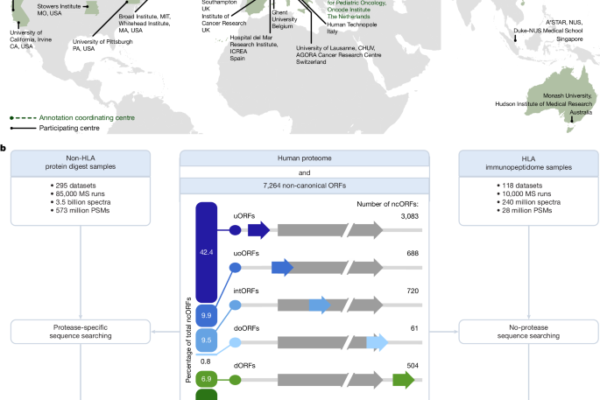
PeptideAtlas database construction and searching The human non-HLA PeptideAtlas 2023-06 build contains 295 ProteomeXchange datasets (PXDs)50 split into 1,172 different experiments that comprise a total of 3.5 billion MS/MS spectra. Sequence database searching was performed using MSFragger51 v.3.7 using search parameters appropriate for each dataset, depending on alkylation, labelling, fragmentation type, instrument, enrichment strategy and more….

Read More

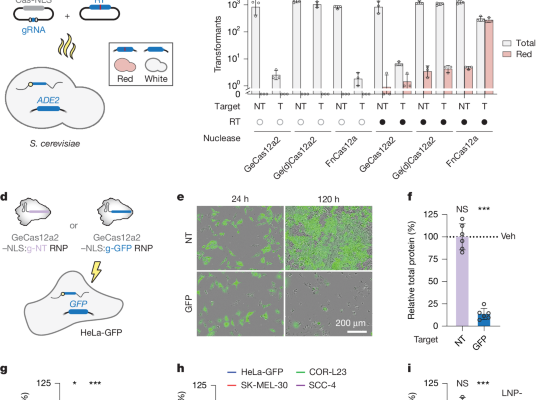
RNA-triggered cell killing with CRISPR–Cas12a2

Phylogenetic analysis The amino acid sequence of GeCas12a2 was aligned with other Cas12a2 nuclease sequences15,59 using Clustal Omega60. The alignment was trimmed with ClipKIT61 and used to reconstruct a phylogeny with IQ-TREE v2.0.3 (-m MFP -T 8 -B 1000)62, using a maximum-likelihood approach. The phylogeny included Cas12a orthologues and used Cas12c as an outgroup. Branch…

Read More