







Punctuated decline of human cooperation

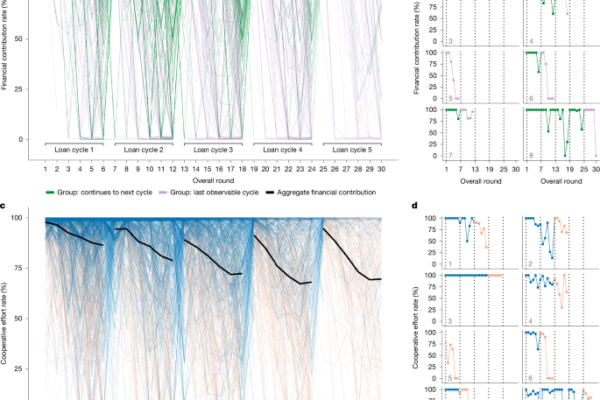
Ethical approval This research was approved by the Central University Research Ethics Committee (CUREC) at the University of Oxford (reference no. SSD/CUREC1A/10-099). The approval included the collection process and analysis of administrative microfinance data and primary data from human participants collected through semi-structured interviews. The research was performed in accordance with all relevant guidelines and…
Read More

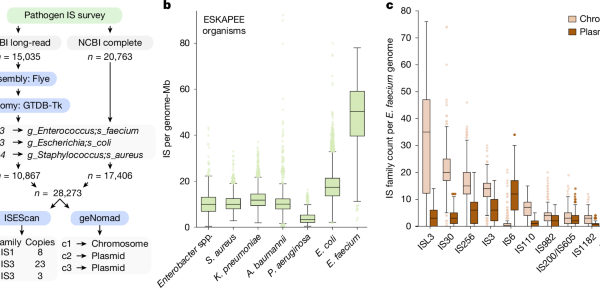
Transposable elements are driving rapid adaptation of Enterococcus faecium

Bacterial genomic datasets compiled for this study Several bacterial genomic datasets were compiled for this study, and different selections of these datasets were used, as appropriate, for the analyses described herein. We refer to these datasets as: ‘NCBI complete genomes’, ‘NCBI long-read assemblies’, ‘NCBI short-read E. faecium assemblies’, ‘SHC long-read Enterococcus isolates’ and ‘SHC long-read metagenomes’….

Read More

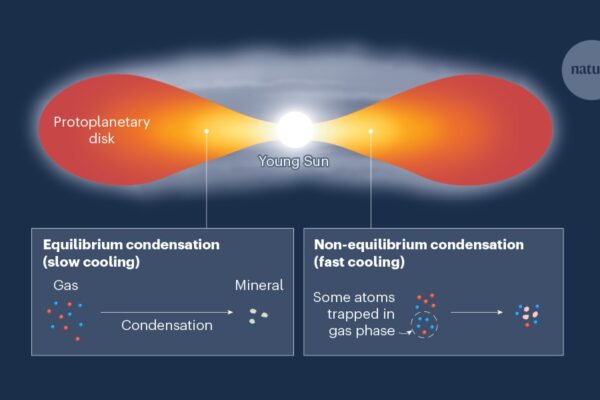
Rapid cooling shaped the formation of the first meteorites in the Solar System

Charnoz, S. et al. Nature 652, 925–930 (2026). Article  Google Scholar  Burbidge, E. M., Burbidge, G. R., Fowler, W. A. & Hoyle, F. Rev. Mod. Phys. 29, 547–654 (1957). Article  Google Scholar  Urey, H. C. Phys. Rev. 88, 248–252 (1952). Article  Google Scholar  Grossman, L. Geochim. Cosmochim. Acta 36, 597–619 (1972). Article  Google Scholar  Larimer,…

Read More

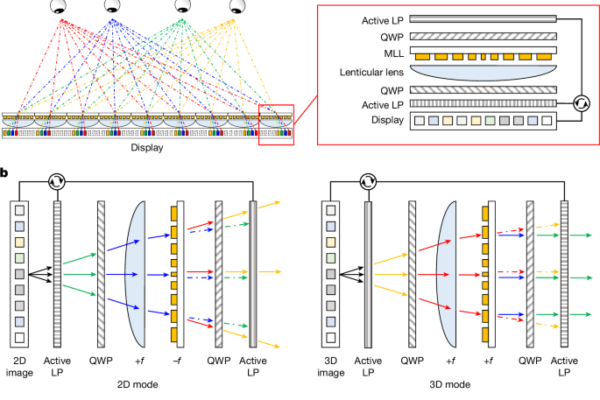
Switchable 2D–3D display through a metasurface lenticular lens

Dodgson, N. A. Autostereoscopic 3D displays. Computer 38, 31–36 (2005). Article  Google Scholar  Lee, B. Three-dimensional displays, past and present. Phys. Today 66, 36–41 (2013). Article  CAS  Google Scholar  Willemsen, O. H., De Zwart, S. T., Hiddink, M. G. H. & Willemsen, O. 2-D/3-D switchable displays. J. Soc. Inf. Display 14, 715–722 (2006). Article  Google…

Read More

Keeping the ‘fairy tale’ of the Marine Biological Laboratory alive

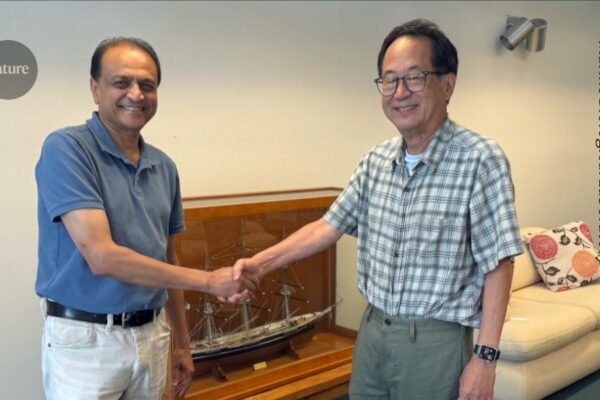
Cell biologist Mark Terasaki (right) has pledged to give US$25 million to the Marine Biological Laboratory in Woods Hole, Massachusetts, over the next five years.Credit: Marine Biological Laboratory To the people of Woods Hole in Massachusetts, and to the researchers working at the renowned 138-year-old Marine Biological Laboratory (MBL) there, cell biologist Mark Terasaki has…

Read More

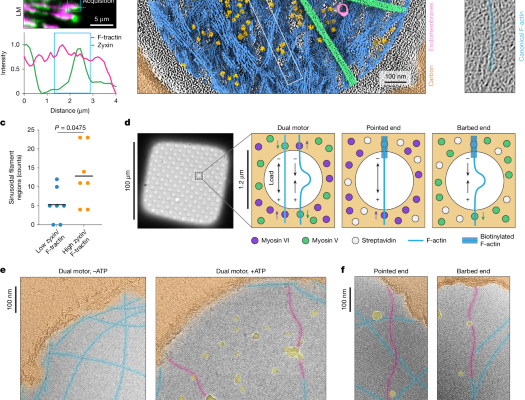
Myosin forces remodel F-actin for mechanosensitive protein recognition

Unless otherwise noted, chemicals and buffer components were purchased from Sigma-Aldrich. Cell culture PtK2 cells (ATCC, CCL-56) were cultured in MEM (Gibco) supplemented with 10% fetal bovine serum (FBS), 1 mM sodium pyruvate, 1× non-essential amino acids (Gibco), and 1× antibiotic–antimycotic (Gibco) at 37 °C in 5% CO2. All cell lines were obtained from ATCC, which validates…

Read More

Specific combinations of human and viral genetic variants explain a cancer predisposition in southern China

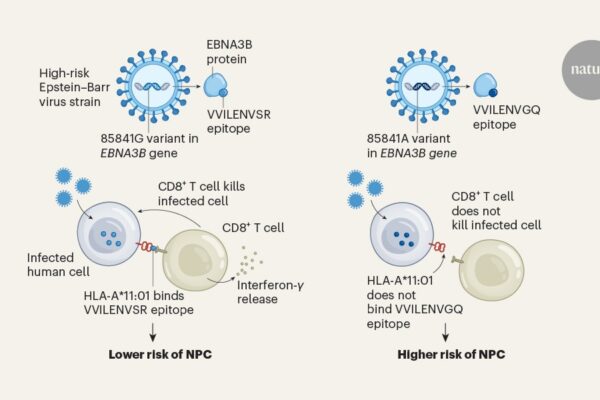
The revolution of genome-wide scans has led to the discovery of numerous robust associations between human genetic variants and disease outcomes, susceptibility and resistance. Many of these associations map to a region of the genome containing HLA genes, which encode a system of proteins that are essential for mounting adaptive immune responses. There is a…

Read More

Multicentre gene therapy for OTOF-related deafness followed up to 2.5 years

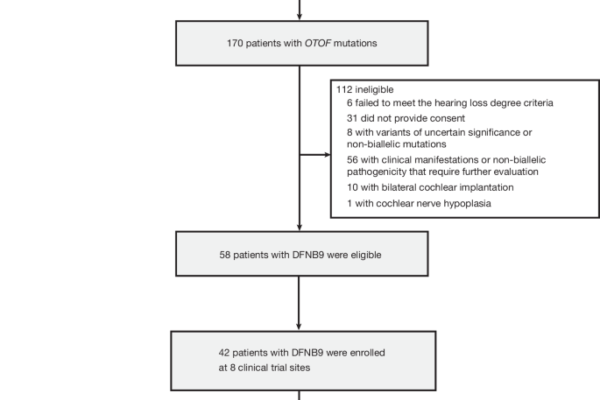
Yasunaga, S. et al. A mutation in OTOF, encoding otoferlin, a FER-1-like protein, causes DFNB9, a nonsyndromic form of deafness. Nat. Genet. 21, 363–369 (1999). Article  CAS  PubMed  Google Scholar  Lv, J. et al. AAV1-hOTOF gene therapy for autosomal recessive deafness 9: a single-arm trial. Lancet 403, 2317–2325 (2024). Article  CAS  PubMed  Google Scholar  Wang,…

Read More

Quadruple pegRNA enables programmable and efficient large genomic insertion

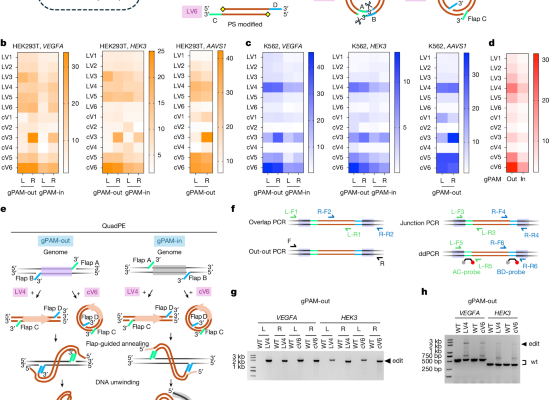
Anzalone, A. V. et al. Search-and-replace genome editing without double-strand breaks or donor DNA. Nature 576, 149–157 (2019). Article  CAS  PubMed  PubMed Central  ADS  Google Scholar  Anzalone, A. V. et al. Programmable deletion, replacement, integration and inversion of large DNA sequences with twin prime editing. Nat. Biotechnol. 40, 731–740 (2022). Article  CAS  PubMed  Google Scholar …

Read More