







Newfound brain network is a ‘secret system’ made of helper cells

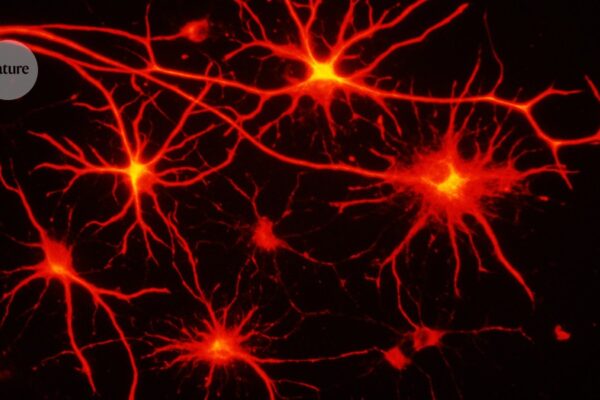
The lesser-known brain cells called astrocytes form their own networks in the brain.Credit: Prof. Stephen Waxman, Hank Morgan/Science Photo Library Scientists have discovered that the unsung brain cells called astrocytes form extensive networks in the mouse brain1 — networks similar in some respects to the brain circuits formed by the more celebrated brain cells called…
Read More

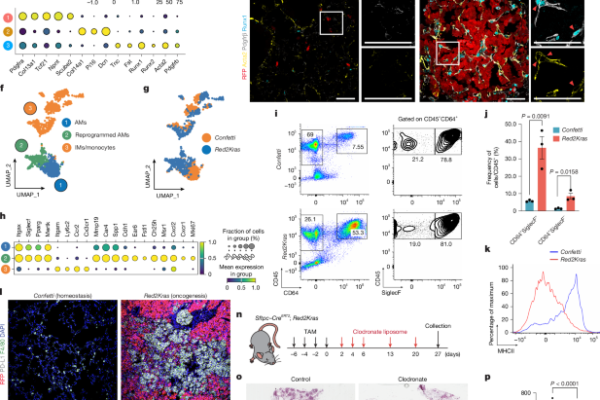
Early fibrotic niches establish tumour-permissive microenvironments

Mice Sftpc–CreERT2 (028054), R26R–Confetti (013731), Pdgfrα–CreERT2 (032770), R26R–iDTR (007900), NOD/Scid Il2rg null Tg (NSG: 005557) and Ai6/RCL–ZsGreen (007906) animals were obtained from The Jackson Laboratory. AregloxP/loxP animals were kindly provided by M. Clatworthy from the University of Cambridge. Red2Kras mice were generated in-house as previously described22. CCR2–CreERT2 mice were kindly provided by B. Becher (University…

Read More

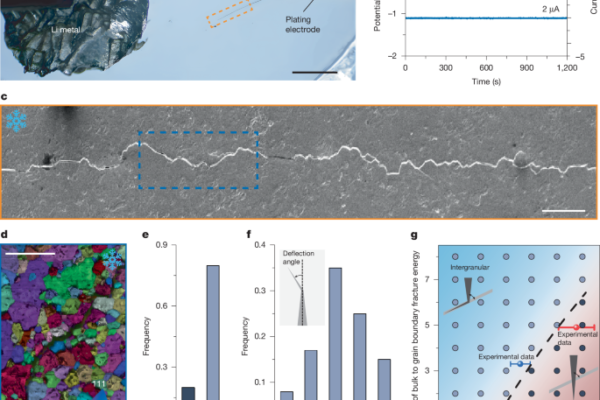
Mechanically driven Li dendrite penetration in garnet solid electrolyte

Li dendrite growth in solid electrolytes LLZTO solid electrolytes were obtained from Toshima Manufacturing Co., Ltd. The pellets were mechanically ground to a thickness of approximately 150 μm, with final polishing performed using a 0.05-μm alcohol-based colloidal silica suspension. To reduce the interfacial resistance between lithium and the solid electrolyte, the thin LLZTO discs were immersed…

Read More

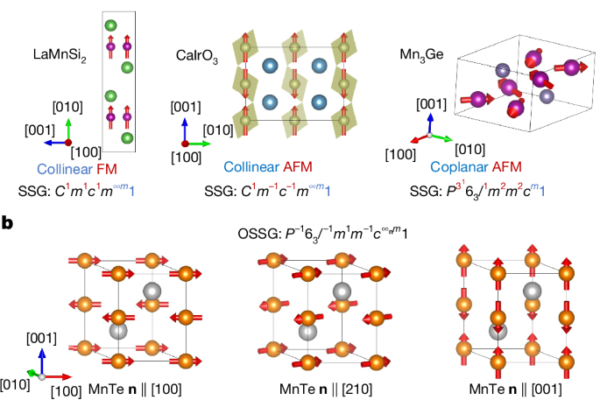
Symmetry classification of magnetic orders using oriented spin space groups

Further classification of magnetic geometries based on the FM/AFM dichotomy On the basis of the FM/AFM dichotomy, the SSG framework enables further classification of magnetic geometry. Here we focus on the SSG-based classification of various antiferromagnetic geometries, especially for noncollinear magnets, which were also phenomenologically described previously such as Néel-type, spiral and multi-q AFM. Experimentally,…

Read More

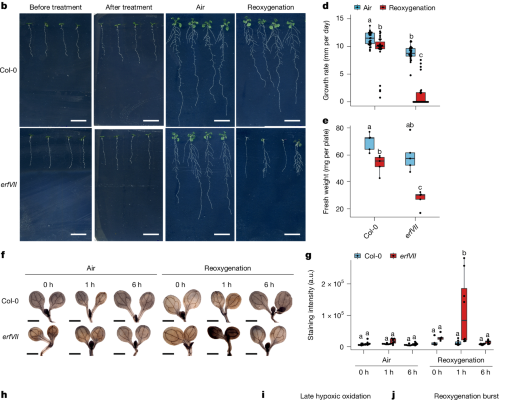
H2O2 repurposes plant O2 sensing to regulate post-hypoxia responses

Experimental model and subjects Plant materials and growth conditions Arabidopsis thaliana Col-0 was used as the wild-type ecotype. The genotypes RAP2.121–28–FLuc, RAP2.12–GFP and Δ13RAP2.12–GFP were as previously described2,3. Seeds were sown in a 3:1 soil/vermiculite mixture, stratified at 4 °C in the dark for 3 days, then germinated at 22 °C/20 °C with a 16 h:8 h light/dark photoperiod and…

Read More

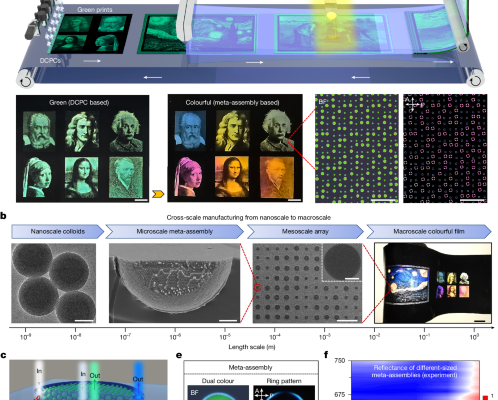
Printable meta-assemblies enable synergetic colouration

Stroud, J. T. & Ratcliff, W. C. Long-term studies provide unique insights into evolution. Nature 639, 589–601 (2025). Article  ADS  CAS  PubMed  PubMed Central  Google Scholar  Vukusic, P. & Sambles, J. R. Photonic structures in biology. Nature 424, 852–855 (2003). Article  ADS  CAS  PubMed  Google Scholar  Liu, M., Wang, S. & Jiang, L. Nature-inspired superwettability…

Read More

Glycerol-driven TNAP activation in thermogenesis and mineralization

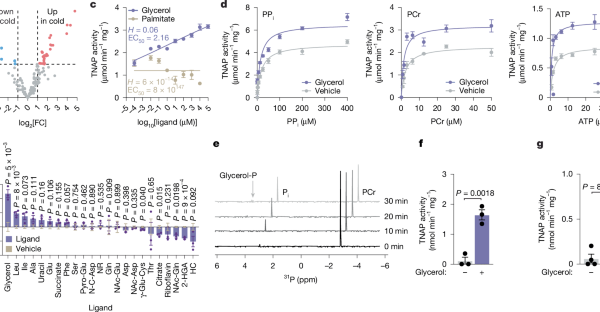
Millan, J. L. Alkaline phosphatases: structure, substrate specificity and functional relatedness to other members of a large superfamily of enzymes. Purinergic Signal. 2, 335–341 (2006). Article  CAS  PubMed  PubMed Central  Google Scholar  Rahbani, J. F. et al. ADRA1A–Gαq signalling potentiates adipocyte thermogenesis through CKB and TNAP. Nat. Metab. 4, 1459–1473 (2022). Article  CAS  PubMed  PubMed…

Read More

Electronic origin of reorganization energy in interfacial electron transfer

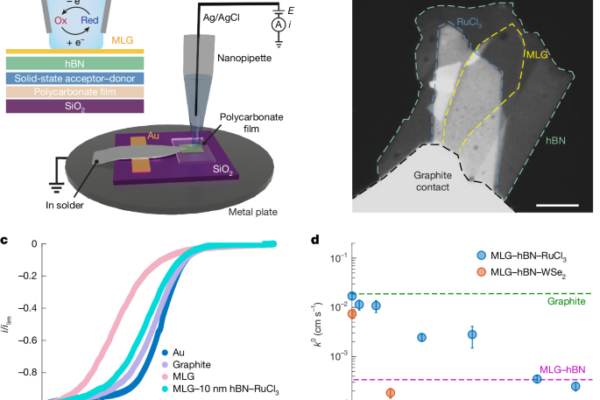
Chemicals and materials Natural Kish graphite crystals (Grade 300, 99.99% purity) were procured from Graphene Supermarket. Hexagonal boron nitride crystals were provided by T. Taniguchi and K. Watanabe, and were used as received. Large, flat crystals of RuCl3 were grown by chemical vapour transport following the procedure detailed in a previous study41. Briefly, commercial RuCl3…

Read More