







Mummified early Permian reptile reveals ancient amniote breathing apparatus

Perry, S. F. & Sander, M. Reconstructing the evolution of the respiratory apparatus in tetrapods. Resp. Physiol. Neurobiol. 144, 125–139 (2004). Article  Google Scholar  Striedter, G. F. & Northcutt, R. G. Brains Through Time: A Natural History of Vertebrates (Oxford Academic, 2019) Buchwitz, M., Jansen, M., Renaudie, J., Marchetti, L. & &Voigt, S. Evolutionary change…


Read More

Genetic predictors of GLP1 receptor agonist weight loss and side effects

Overview of study recruitment Participants in this study were recruited from the customer base of 23andMe. Participants provided informed consent and volunteered to participate in the research online, under a protocol approved by the external Association for the Accreditation of Human Research Protection Programs-accredited Salus Institutional Review Board (https://www.versiticlinicaltrials.org/salusirb). Participants were included in the analysis…

Read More

Clinical application of base editing for treating β-thalassaemia

Cao, A. & Galanello, R. Beta-thalassemia. Genet. Med. 12, 61–76 (2010). Article  CAS  PubMed  Google Scholar  Origa, R. Beta-thalassemia. Genet. Med. 19, 609–619 (2017). Article  CAS  PubMed  Google Scholar  Taher, A. T., Musallam, K. M. & Cappellini, M. D. β-Thalassemias. N. Engl. J. Med. 384, 727–743 (2021). Article  PubMed  Google Scholar  Hardouin, G., Miccio, A….

Read More

Ambiphilic cross-coupling with aryl-bismuth reagents

Cross-coupling reactions traditionally permit the formation of Ar-Ar bonds between an aryl nucleophile and an aryl electrophile under transition metal catalysis1,2. The high selectivity of the myriad of couplings known to date relies on a tailored combination of nucleophilic and electrophilic coupling partners, enabled by the mechanistic distinction between nucleophiles and electrophiles, which undergo fundamentally…

Read More

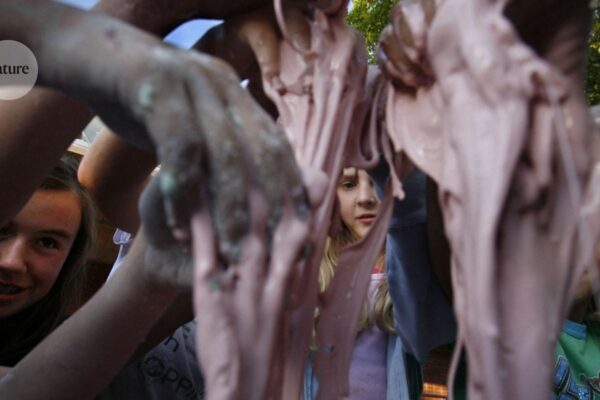
Liquid or solid? Oobleck droplets are both

The ingredients for this study are probably already in your kitchen. To better understand a mysterious class of fluids, researchers tested how a concoction of cornstarch and water called oobleck — a staple of classroom experiments — behaves when dropped onto a surface1. Access options Access Nature and 54 other Nature Portfolio journals Get Nature+,…

Read More